
Last Updated on June 21, 2026 by Tim L. | Founder of Pest Control Playbook
Ants in Your Apartment or Condo? Here’s Why They’re There and How to Get Rid of Them
You noticed one ant. Then five. Then a trail running along your baseboard straight into your kitchen. If you’re dealing with ants in your apartment, you’re not alone — ant infestations are one of the most common pest complaints I find in multi-unit residential buildings, and they can be surprisingly stubborn to eliminate without knowing exactly what you’re up against.
I’ve been a licensed pest management professional for 30 years, and I’ve treated hundreds of apartment buildings for ant infestations of every kind. What I’ve learned is that most people — and even some pest control companies — make the same critical mistakes that keep ant problems coming back over and over again. This guide is going to change that for you.
Why Apartments Are Especially Vulnerable to Ant Infestations
Apartment buildings create the perfect environment for ants to thrive and spread. Here’s a list of common causes of Ants in Your Apartment or Condominium from what I find in the field.
Shared walls and utility runs. Ants travel through wall voids, plumbing chases, and electrical conduits. A colony nesting in unit 204 can forage into units 203, 205, and the floor above and below without ever stepping into a hallway.
Moisture. Multi-unit buildings often have chronic moisture issues — slow pipe leaks, condensation, poorly sealed windows — and moisture is one of the primary attractants for many ant species.
Abundant food sources. Dozens of households in one building means crumbs, spills, unsealed food, and garbage — a smorgasbord for foraging ant workers.
Difficult-to-treat voids. Apartment construction often means inaccessible wall voids and structural gaps that provide ideal nesting harborage deep inside the building envelope.
In 30 years of treating multi-unit residential properties, I can tell you that ant infestations in apartments almost always involve more than one unit, even if only one tenant is complaining. The colony is rarely where the ants are seen.
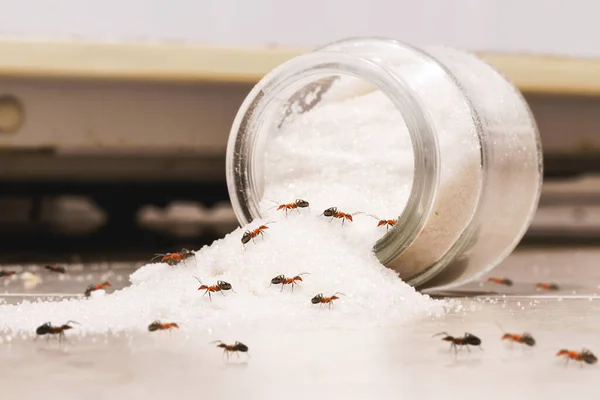
Identify Your Ant First — This Step Is Non-Negotiable
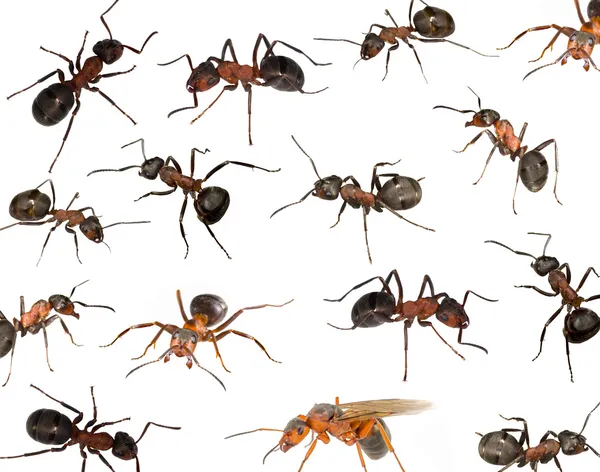
One of the biggest mistakes I see is treating for “ants” generically without first identifying the species. Different ant species require completely different treatment strategies. Get this wrong and you’ll make the problem worse, not better.
Here are the most common ants found in apartments:
Odorous House Ants (Tapinoma sessile)
The single most common ant in apartment infestations across North America. Small (1/16 to 1/8 inch), dark brown to black, and named for the distinctive rotten-coconut smell they emit when crushed. Odorous house ants form massive supercolonies with multiple queens, which makes them incredibly resilient. Kill one queen and the colony simply reorganizes. They are highly attracted to sweets and moisture.
💡💡 Have Flying Ants in Your Apartment? Read This Article First
Pavement Ants (Tetramorium caespitum)
Small, dark ants that originally nest in soil under sidewalks, driveways, and building foundations. In apartments — especially ground floor and basement units — pavement ants enter through cracks in slabs and foundation walls seeking food. They’ll eat almost anything.
Carpenter Ants (Camponotus spp.)
The largest ants you’ll find in an apartment, often 1/4 to 1/2 inch long, typically black or black and red. Carpenter ants don’t eat wood — they excavate it to nest inside. Finding carpenter ants in your apartment is a serious sign of a moisture problem and possible structural wood damage somewhere in the building. This is not a DIY situation.
Argentine Ants (Linepithema humile)
Common in warmer climates and increasingly widespread. Like odorous house ants, Argentine ants form supercolonies with multiple queens and are notoriously difficult to control. They aggressively out-compete other ant species and can establish massive networks throughout an entire building.
Pharaoh Ants (Monomorium pharaonis)
Tiny (1/16 inch), pale yellow to light brown ants that are among the most difficult apartment pests to control. Pharaoh ants are notorious for “budding” — when stressed by pesticides or disruption, a queen and a group of workers simply break off and form a new colony elsewhere in the building. Spray a Pharaoh ant trail with a can of Raid and you may turn one colony into ten. After 30 years in this industry, Pharaoh ants remain one of the pests I respect most.
Fire Ants (Solenopsis invicta)
More common in southern states. Fire ants are aggressive, sting repeatedly, and can pose real medical risks to sensitive individuals. Finding fire ants in an apartment warrants immediate professional attention.
What’s Attracting Ants to Your Apartment?
💡💡 Why do i have Ants in my Apartment or Condo? Read This First
Before any treatment can be successful, you need to understand and address what’s drawing ants inside. In my experience, the attractants almost always fall into one of three categories:
Food. Even microscopic food residue is enough to draw foraging ant workers. Pet food left in bowls overnight, crumbs under the stove, sticky residue inside cabinets, unsealed pantry items, fruit left on the counter — all of it is a beacon.
Water and moisture. Many ant species are as attracted to moisture as they are to food. Leaky pipes under sinks, condensation on cold pipes, a dripping faucet, even a damp sponge left on the counter can be enough. Carpenter ants almost always indicate a moisture source.
Harborage and warmth. Ants seek shelter. Clutter, cardboard boxes, stacks of paper bags, and similar items create ideal harborage conditions inside your unit.
What NOT to Do — Mistakes That Make Ant Infestations Worse
After 30 years treating ant infestations, I’ve cleaned up after a lot of well-intentioned but counterproductive DIY attempts. Here’s what to avoid:
Don’t Spray Ant Trails with Repellent Insecticides
This is the single most common mistake. Grabbing a can of Raid or any pyrethroid-based spray and hitting the ant trail feels satisfying — and it kills the ants you can see. But repellent insecticides cause a phenomenon called budding or fragmentation, particularly in multi-queen species like Pharaoh ants, Argentine ants, and odorous house ants. The colony detects the chemical threat, queens scatter with groups of workers, and what was one colony becomes several new ones spread throughout your apartment or building.
Don’t Ignore the Problem
Ant colonies grow. A small trail today can represent a colony of tens of thousands — and some species, left untreated, will number in the millions. Early intervention is always easier and less expensive than dealing with a mature, established infestation.
Don’t Treat Only Where You See Ants
The foraging workers you see on your counter represent a tiny fraction of the colony. The colony — queens, brood, and the bulk of the workers — is almost certainly somewhere you’re not seeing: inside a wall void, under flooring, in a ceiling space, or even in another unit. Treating only the visible trail addresses the symptom, not the problem.
The Right Way to Treat Ants in an Apartment
Step 1: Identify the Species
As covered above, this determines everything. If you’re not sure, a licensed pest management professional can identify the species quickly and build the right treatment plan.
Step 2: Sanitation First
Clean thoroughly before any treatment. Remove food sources, fix moisture issues, declutter. Sanitation won’t eliminate an established infestation on its own, but it dramatically improves treatment results and reduces reinfestation pressure.
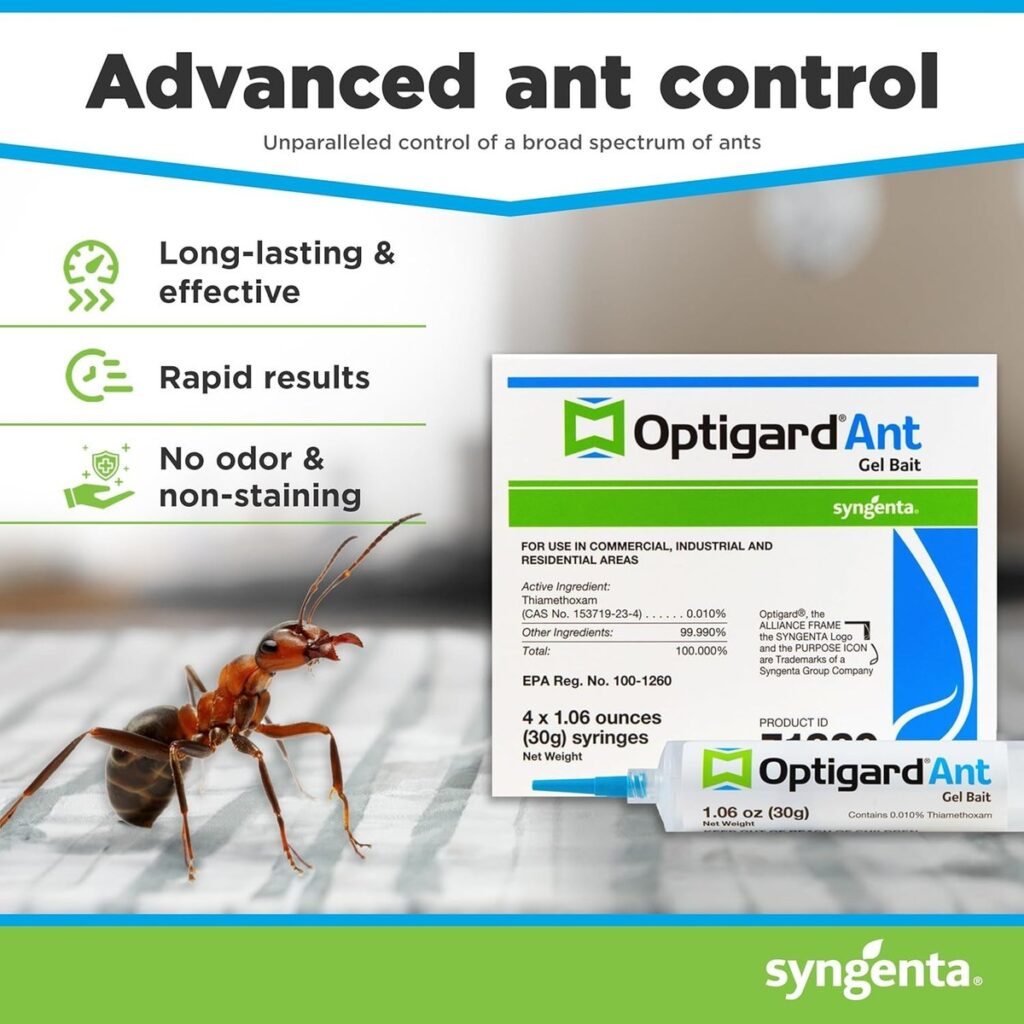
Step 3: Gel Bait — The Gold Standard for Apartment Ant Control
For most apartment ant species, gel bait is the most effective and safest treatment approach. Here’s why it works:
Ant workers are foragers — their job is to find food and bring it back to the colony. Gel bait exploits this behavior. Workers find the bait, feed on it, carry it back to the nest, and share it through trophallaxis (food sharing) with nestmates, larvae, and queens. Done correctly, baiting eliminates the entire colony, not just the foragers you can see.
For sweet-feeding ants like odorous house ants and Argentine ants, sugar-based gel baits work extremely well. For protein-feeding ants or mixed feeders, protein-based or combination baits may be more effective. Pharaoh ants specifically require a dedicated baiting program — no repellent sprays anywhere in the building.
Step 4: Perimeter and Entry Point Treatment
Identifying and treating entry points — gaps around pipes, cracks in baseboards, window and door frames — with appropriate non-repellent residual products helps reduce foraging pressure. Non-repellent active ingredients like fipronil or certain neonicotinoids allow ants to pass through treated areas and carry the active ingredient back to the colony rather than being repelled away from it.
Step 5: Notify Building Management
If you’re a tenant, your landlord or property manager needs to know. Effective ant control in an apartment building almost always requires a building-wide approach. Treating one unit while adjacent units remain untreated is like bailing out a boat without plugging the hole. A qualified pest management professional working across the entire property will always get better results than isolated unit-by-unit treatments.
💡💡 Field Tested Best Ant Baits for Apartments
When to Call a Professional
Some ant situations are straightforward enough for a knowledgeable DIYer to manage. Many are not. Call a licensed pest management professional if:
- You have or suspect Pharaoh ants (treatment requires a specialized baiting-only protocol)
- You’re seeing carpenter ants (indicates moisture and possible structural damage)
- The infestation spans multiple rooms or units
- DIY treatments have failed or made the problem worse
- You have children, pets, or sensitive individuals in the home and want to minimize pesticide exposure
With 30 years in the pest control industry, I’ve seen ant infestations that looked simple turn out to be building-wide Pharaoh ant supercolonies — and I’ve seen what looked like overwhelming infestations resolve quickly with the right bait and a little patience. Species ID and correct treatment strategy make all the difference.
Preventing Ants in Your Apartment: Long-Term Tips
Once you’ve dealt with an infestation, keep ants from coming back:
- Store all food in airtight containers — including pet food
- Clean up spills and crumbs immediately
- Don’t leave dishes in the sink overnight
- Fix any dripping faucets or leaking pipes under sinks
- Seal gaps around pipes where they enter walls or cabinets (use caulk or copper mesh)
- Keep counters, stovetops, and the area behind and under appliances clean
- Take trash out regularly and use a lidded bin
- Inspect grocery bags, boxes, and secondhand furniture before bringing them inside — ants hitchhike

Final Thoughts
Ants in your apartment are a frustrating but very solvable problem — if you approach it correctly. The keys are identifying your species, eliminating attractants, using the right treatment for that species (almost always gel bait for apartment situations), and addressing the issue at a building level when necessary.
After 30 years in pest control, I’ll tell you this: the tenants who solve their ant problems fastest are the ones who resist the urge to grab a can of spray and start dousing everything in sight. Slow down, identify what you’re dealing with, bait correctly, and let the colony do the work for you.