
Last Updated on July 24, 2026 by Tim L. | Founder of Pest Control Playbook
A Pest Control Professional With Decades of Experience Explains What’s Really Attracting Ants Indoors—and How to Stop Them
If you’re asking, “Why do I have ants in my house?” you’re not alone.
After decades of working in pest control, I can tell you this is one of the most common questions homeowners ask—especially during warmer months when ant activity increases dramatically.
The main reason you have ants in your house is because your home is providing something they need. us. Ants are entering your home in search of food, water, or shelter. But the real reason infestations develop often comes down to a combination of environmental factors, entry points, and how ant colonies operate.
Understanding that behavior is the key to getting rid of them permanently.
The Most Common Causes of Ants in the House
Ants don’t enter homes randomly.
In almost every case I’ve seen over the years as a pest control professional, ants come indoors for three basic needs:
- Food sources
- Moisture or water
- Warmth and shelter
Food is the number one reason homeowners get ants in the house. Even the smallest food residue can attract scout ants. Once a scout finds a reliable source, it leaves a chemical trail that brings the entire colony inside.
That’s why you might only see a few ants at first—and then suddenly see dozens or hundreds.
Most Common Reasons Ants Invade Houses
1. Food Left Out or Easy to Access
One of the biggest triggers is food availability.
Ants are especially attracted to:
- Sugar spills
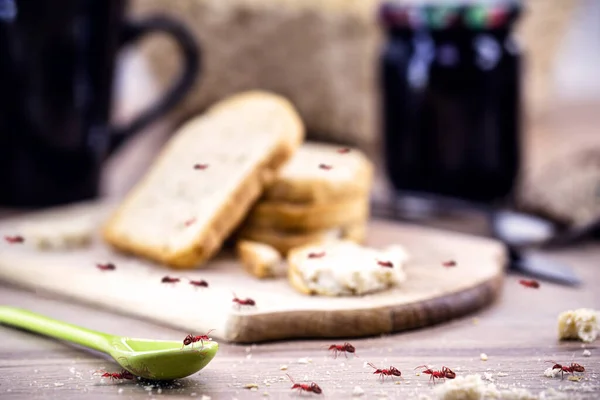
- Crumbs on counters and floors
- Dirty dishes left overnight
- Pet food bowls
- Trash cans without tight lids
In my experience, kitchens are the number one entry point for ant infestations.
2. Moisture Problems
Another major reason you have ants in the house is excess moisture. Many homeowners don’t realize that ants also seek water.
Common moisture sources include:
- Leaky pipes under sinks
- Damp bathroom areas
- Condensation near appliances
- Standing water
- Poor ventilation in crawl spaces
Some species, like carpenter ants, are especially drawn to moist or damaged wood.
3. Entry Points Around Your Home
Ants are extremely small and can enter through almost invisible gaps.
Typical entry points include:
- Cracks in foundations
- Gaps around windows and doors
- Utility line openings
- Expansion joints
- Wall voids
After decades in the field, I can confidently say most infestations are traced back to multiple entry points—not just one. Want to get rid of ants fast? Check out the link below. These are the ant gel baits that I use in the field on a daily basis that actually work great. They are FAST, EFFECTIVE, and ANTS LOVE IT!!
👉👉 Field Tested Ant Baits that Actually Work. Read This Article
4. Outdoor Colonies Too Close to the House
Sometimes the problem isn’t inside your home at all.
Ant colonies often build nests:
- In mulch beds
- Under sidewalks
- Along foundations
- Under landscaping stones
- In lawns near the house
When colonies are close to the structure, ants will naturally explore indoors to search for food and water sources inside your house.
5. Seasonal Behavior Changes
Ant activity often increases during:
- Spring (colony expansion)
- Summer (food searching peaks)
- After heavy rain (nest flooding)
This is why many homeowners suddenly notice ants “out of nowhere.”
Signs You Have an Ant Infestation in Your House
If you’re unsure whether you’re dealing with a real infestation, look for:
- Repeated ant trails in the same areas
- Ants appearing daily in kitchens or bathrooms
- Small piles of dirt or debris near walls
- Ants consistently returning after cleaning
- Visible nests outside near the foundation
👉👉 Do you Have Ants in Your Kitchen? Read This Article First
Why Ant Problems Keep Coming Back
One of the biggest mistakes I see is treating ants like a surface problem.
Spraying visible ants may kill what you see, but it does not eliminate the colony.
If the colony remains intact, ants will continue to return—sometimes within hours or days.
That’s why long-term control usually requires targeting the colony itself, not just the workers.
How to Get Rid of Ants in Your House (Quick Overview)
While this article focuses on why ants are present, here is the general approach that works best in my experience:
- Eliminate food sources
- Remove moisture problems
- Seal entry points
- Use ant baits to target the colony
- Avoid overusing sprays that repel ants
Ant baiting is especially effective because worker ants carry the bait back to the colony, helping eliminate the source of the infestation.
Professional Insight From Decades in Pest Control
After decades of working in homes dealing with ant infestations in the house, one thing has stayed consistent:
Ant problems are almost never random.
They are usually a combination of:
- Easy access to food or water
- Structural entry points
- Nearby outdoor colonies
Once you address all three, ant problems become much easier to control—and in many cases, completely preventable.
Final Answer: Why Do You Have Ants in Your House?
You have ants in your house because your home is providing one or more of the following:
- Food
- Water
- Shelter
- Access points from nearby colonies
The good news is that once you identify the source, ants are very treatable with the right strategy.
In most cases, combining proper sanitation, sealing entry points, and using targeted ant bait will eliminate the infestation and prevent it from returning.