
Last Updated on June 24, 2026 by Tim L. | Founder of Pest Control Playbook
Finding Roaches in the Dishwasher? Here’s What It Means
Discovering Roaches in the Dishwasher is enough to make any homeowner cringe. Unfortunately, it’s a common problem that I see in the field often, especially with German cockroaches.
After decades working in the pest control industry, I’ve found that dishwashers are one of the most overlooked hiding spots during a roach infestation. Homeowners often focus on cabinets, sinks, and countertops while dozens of roaches hide just inches away behind or underneath the dishwasher. Actually, in my experience, I have found that when the dishwasher is rarely used, it is an ideal place for roaches to hide, because it has bits of food in the filter, and is the perfect place for roaches to hide.
The good news? Roaches in the dishwasher are usually a sign of a larger problem nearby, and with the right approach, they can be eliminated.
Why Are Roaches Attracted to Dishwashers?
Dishwashers provide everything cockroaches need to survive:
- Warmth
- Moisture
- Food particles
- Darkness
- Protection from disturbance
German cockroaches, the most common indoor pest species, thrive in warm environments. The motor underneath a dishwasher produces heat, while small leaks and condensation provide a constant water source.
Even if your dishes appear clean, tiny food particles can accumulate in filters, seals, and drainage components.
To a cockroach, your dishwasher is prime real estate.
Where Roaches Hide Around a Dishwasher
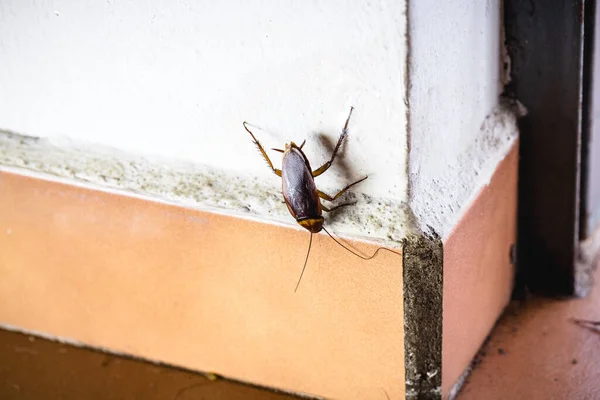
Most homeowners assume roaches are living inside the dishwasher itself.
In reality, they’re usually hiding in nearby areas such as:
- Behind the dishwasher
- Under the dishwasher
- Inside wall voids
- Around plumbing penetrations
- Under kitchen cabinets
- Behind baseboards
- Near hot water lines
When servicing homes for German cockroaches, I often found the highest concentrations directly behind the dishwasher where warmth, moisture, and food sources combine.
👉💡👉💡 Read this Article to see more places Roaches love to Hide
Signs That You Have Roaches in the Dishwasher
You may have a dishwasher infestation if you notice:
Live Roaches
Especially at night when kitchen lights are turned on.
Roach Droppings
Small black specks that resemble coffee grounds or black pepper.
Egg Capsules
German cockroach egg cases are light brown and oval-shaped.
Musty Odor
Heavy infestations often produce a distinct oily or musty smell.
Shed Skins
Young roaches shed their exoskeletons multiple times as they grow.
Can Roaches Survive a Dishwasher Cycle?
Many homeowners assume a dishwasher cycle kills any roaches inside.
While the heat can kill some exposed insects, it rarely solves the problem.
Most cockroaches are hiding behind the unit, underneath it, or inside cracks where they avoid direct exposure to heat and water.
Running the dishwasher may kill a few roaches, but it won’t eliminate the infestation.
💡👉💡👉 Complete Roach Elimination Guide, Read This Article
How to Get Rid of Roaches in the Dishwasher
1. Inspect the Area Thoroughly
Pull the dishwasher out if possible and inspect:
- Water lines
- Drain connections
- Wall penetrations
- Flooring underneath
- Adjacent cabinets
This is often where you’ll find droppings and hiding spots.
2. Fix Moisture Problems
Cockroaches need water.
Check for:
- Leaking supply lines
- Slow drips
- Loose fittings
- Condensation buildup
Even a minor leak can support a large German cockroach population.
3. Clean Food Sources
Pay special attention to:
- Dishwasher filters
- Floor edges
- Cracks near cabinets
- Areas under appliances
Food debris provides a steady food supply that helps infestations grow.
4. Use Roach Baits
Professional-grade roach baits are one of the most effective control methods.
Place bait:
- Behind the dishwasher
- Under the sink
- Behind the refrigerator
- Along cabinet corners
- Near plumbing penetrations
Avoid spraying directly over bait placements, as this can reduce effectiveness.
💡👉💡👉 Want to know the Best Roach Baits to Use? Read this Article
5. Apply Insecticide Dust in Hidden Areas
Insecticide dust can be extremely effective when applied correctly.
Dust treatments may be placed:
- In wall voids
- Behind cabinets
- Around plumbing openings
- Under appliances
Because dust remains active for extended periods, it can help eliminate hidden cockroaches that avoid bait placements.
Should You Spray Roaches Around the Dishwasher?
Sprays can kill visible roaches, but they rarely eliminate the source of the infestation.
One of the most common mistakes homeowners make is repeatedly spraying every roach they see while ignoring the nest.
In my experience, successful German cockroach control depends more on:
- Proper bait placement
- Moisture reduction
- Sanitation
- Crack and crevice treatments
Than simply spraying exposed insects.
How Long Does It Take to Eliminate Dishwasher Roaches?
The timeline depends on the severity of the infestation.
Light infestations may improve significantly within a few weeks.
Moderate to heavy infestations often require several weeks of consistent treatment and monitoring.
The key is targeting the entire population rather than the individual roaches you happen to see.
When to Call a Professional
Consider professional treatment if:
- Roaches continue appearing after several weeks
- You see roaches during the daytime
- Multiple rooms are affected
- The infestation returns repeatedly
Daytime sightings often indicate a larger population than most homeowners realize.
Final Thoughts
Finding roaches in the dishwasher can be alarming, but the appliance itself is rarely the true problem.
In most cases, the dishwasher simply provides warmth and moisture that attract cockroaches already living nearby.
After years in the pest control industry, I’ve found that the most successful treatments focus on identifying hidden harborages, eliminating moisture sources, and using proven baiting strategies rather than relying solely on sprays.
If you’re seeing roaches around your dishwasher, act quickly. Small infestations are far easier—and less expensive—to eliminate than large established populations.