
Last Updated on July 27, 2026 by Tim L. | Founder of Pest Control Playbook
How to Find an Ant Nest: This is How I do it In The Field
If you’ve been seeing ants in your kitchen, bathroom, or around your home, you’ve probably wondered where they’re coming from. After more than 30 years in the pest control industry, I can tell you that finding the nest is often the key to solving the problem for good. While you don’t always need to locate the nest to eliminate an infestation, knowing where ants are nesting can make treatment faster and more effective.
👉👉💡💡 Quick Answer: The easiest way to find an ant nest is to follow worker ants back to their entry point or trail during their busiest feeding times, usually early morning or evening. A simple way to do this on the exterior is to use granular ant bait, wait for the ants to pick it up, and simply follow them as they take it back to the nest!
Start by Following the Ant Trail
One of the easiest ways to locate an ant nest is to watch where the ants are going. Worker ants travel back and forth between food sources and their colony, often following invisible scent trails laid down by other ants.
Instead of spraying them immediately, spend a few minutes watching their movement. Follow the trail as far as possible to see where they’re entering or leaving your home. This works especially well after putting down Gel Bait in the Kitchen, Bathroom, Etc.
👉💡 Check Out This Article for the Best Ant Baits I Use in the Field
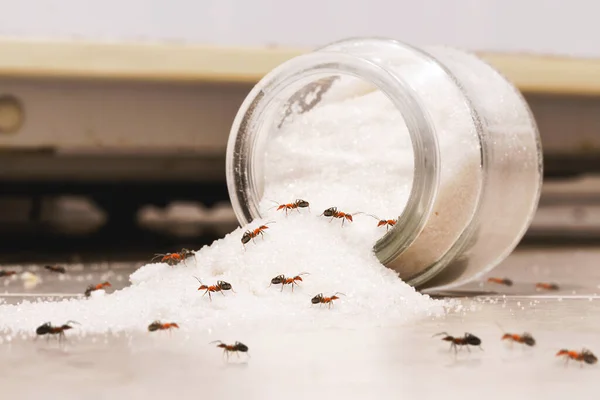
Check Common Nesting Areas
Depending on the species, ants commonly nest:
- Under rocks and landscaping
- Along sidewalks and driveways
- Inside mulch beds
- Under decks and patios
- Around tree roots
- Behind walls
- Under kitchen cabinets
- Around plumbing pipes
- Inside wall voids
- Near windows and door frames
Moisture problems can also attract ants, so don’t overlook areas around leaking pipes or damaged wood. Check near downspouts, as I have found 100s of ant nests over the years in close proximity.
Look Outside First
In my experience, many indoor ant problems actually begin outdoors. Ants often establish colonies in the yard before sending worker ants inside in search of food and water.
Walk around your home’s foundation and look for:
- Trails of ants traveling along the foundation.
- Small piles of soil.
- Cracks in sidewalks.
- Mulch that’s full of activity.
- Ants entering gaps around utility lines.
Sometimes the colony is only a few feet from where you’re seeing ants indoors.
Don’t Disturb the Trail Too Soon
One of the biggest mistakes homeowners make is spraying the first ants they see.
While this kills a few workers, it also destroys the trail you’re trying to follow. Even worse, some ant species respond by splitting into multiple colonies, making the infestation even harder to eliminate.
Whenever possible, locate the ant nest before applying any treatment.
👉💡 Ant Bait is Not Working? Find Out Why
What If You Can’t Find the Nest?
Don’t worry—many nests are hidden inside walls, beneath concrete slabs, or underground.
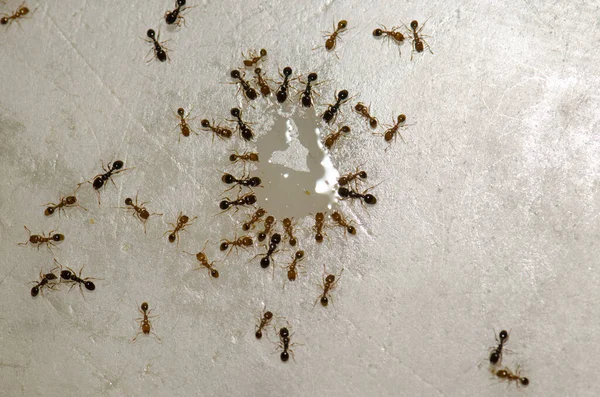
Fortunately, you don’t always need to locate the colony. Properly placed ant bait allows worker ants to carry food back to the nest, feeding the queen and the rest of the colony. In many cases, this is more effective than treating the visible nest itself.
My Biggest Mistake Early in My Career
Early in my career, I spent too much time looking for every ant nest before beginning treatment. While finding the colony is helpful, I eventually learned that understanding ant behavior is even more important. A well-placed bait often reaches colonies that are completely hidden from view. Instead of chasing every worker ant, I learned to let them do the work by carrying bait directly back to the nest.
When Should You Call a Professional?
If you’ve followed ant trails for several days and still can’t locate the source, or if ants continue returning after multiple treatments, the colony may be hidden inside a wall void, beneath a slab, or there may be multiple colonies on the property. A professional inspection can often identify nesting sites that aren’t visible to homeowners.
👉💡 Not Sure if You Have Ants or Termites? Read This Now
Frequently Asked Questions
Should I spray ants when I see them?
Usually, no. Following the trail first often provides valuable information about where they’re coming from. In many situations, bait is a more effective long-term solution.
Do all ants have one nest?
No. Some species have a single colony, while others can have multiple connected nests spread throughout a property.
Can ants live inside walls?
Yes. Many species will nest inside wall voids, around insulation, near plumbing, or in moisture-damaged wood.
About The Author
As the founder of Pest Control Playbook, I have more than 30 years of hands-on experience in the pest control industry. Drawing from real-world field work in residential and commercial settings, the goal of this site is to provide homeowners with practical, straightforward pest control advice that actually works.