Last Updated on September 15, 2026 by Tim L. | Founder of Pest Control Playbook | Reviewed for Scientific Accuracy by our Co-Founder, an Associate Certified Entomologist (ACE)
In my 42 years crawling through dark crawlspaces, damp basements, and dusty attics, I have come face-to-face with hundreds of thousands of spiders. Every single week, a panicked homeowner calls me because they found a spider in their house and want to know if it’s poisonous.
Here is the honest truth from a guy who has spent a lifetime in the trenches: 95% of the spiders you find inside your home are completely harmless. They do not want anything to do with you. They are simply inside because your house has a buffet of other insects for them to eat.
However, you cannot afford to guess when it comes to the other 5%. In the United States, there are two medically significant spiders that require absolute caution: the Black Widow and the Brown Recluse.
This handbook will teach you exactly how to identify what is crawling on your wall, which ones require action, and how to strip away the conditions that invite them inside.
The Common (and Harmless) House Spiders
If you spot a spider out in the open during the day, it is almost always one of these common, non-threatening species.
Cellar Spiders (Daddy Longlegs)
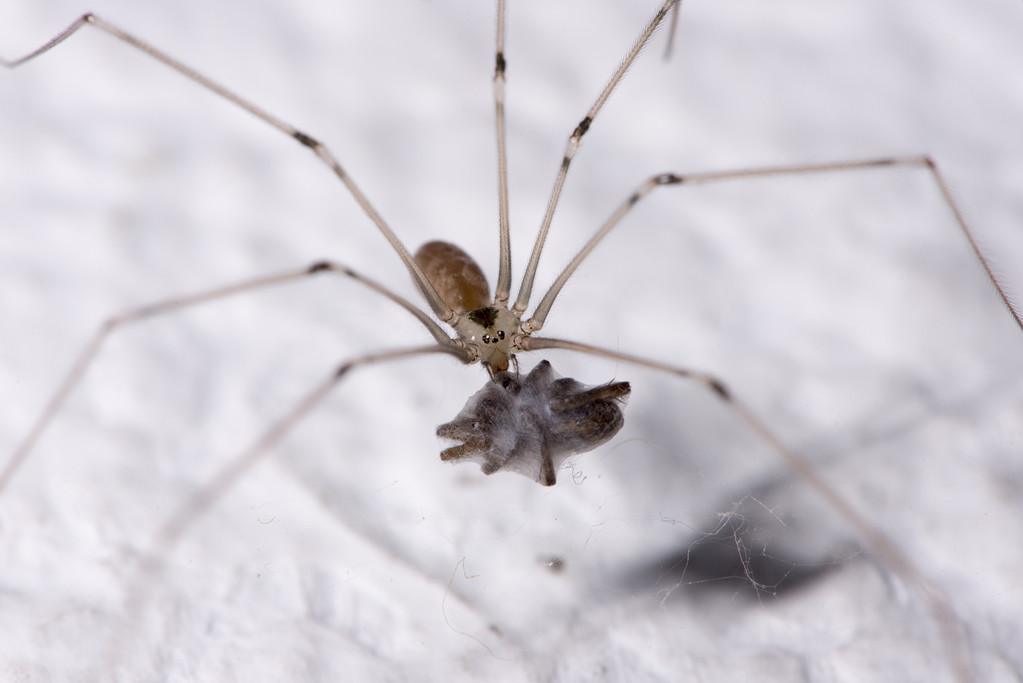
These are the spiders with the tiny, peanut-sized bodies and paper-thin, extraordinarily long legs. You will find them hanging upside down in loose, messy webs near your basement ceiling corners, joists, and dark garage rafters. They have zero interest in you and spend their lives eating mosquitoes, gnats, and flies.
Wolf Spiders
Wolf spiders scare homeowners more than almost any other pest because they are large, hairy, and lightning-fast. They do not spin webs to catch food. Instead, they run across your floors and baseboards to hunt down beetles and roaches. Despite their aggressive look, their venom is mild, and they only bite if you actively crush them.
Yellow Sac Spiders
If you see a small, pale yellow or light green spider crawling up your bedroom wall near the ceiling line, it is likely a sac spider. They build small, silken, tube-like tents in the corners of walls and ceilings to rest in during the day. While their bites can be a bit painful and itchy—similar to a wasp sting—they are not dangerous.
💡 Professional Affiliate & Editorial Disclosure
Transparency Note: At Pest Control Playbook, our mission is to provide actionable, field-proven advice backed by 42 years of combined field experience. To keep our deep guides free and support the site, some of the links on this page are affiliate links. If you click through and buy a recommended professional-grade product, we may earn a small commission at no extra cost to you. We only recommend solutions we have personally used to solve real-world infestations in the field.
The Two Medically Significant Spiders You Need to Know
You do not need to panic when you see a spider, but you do need to recognize these two species immediately.
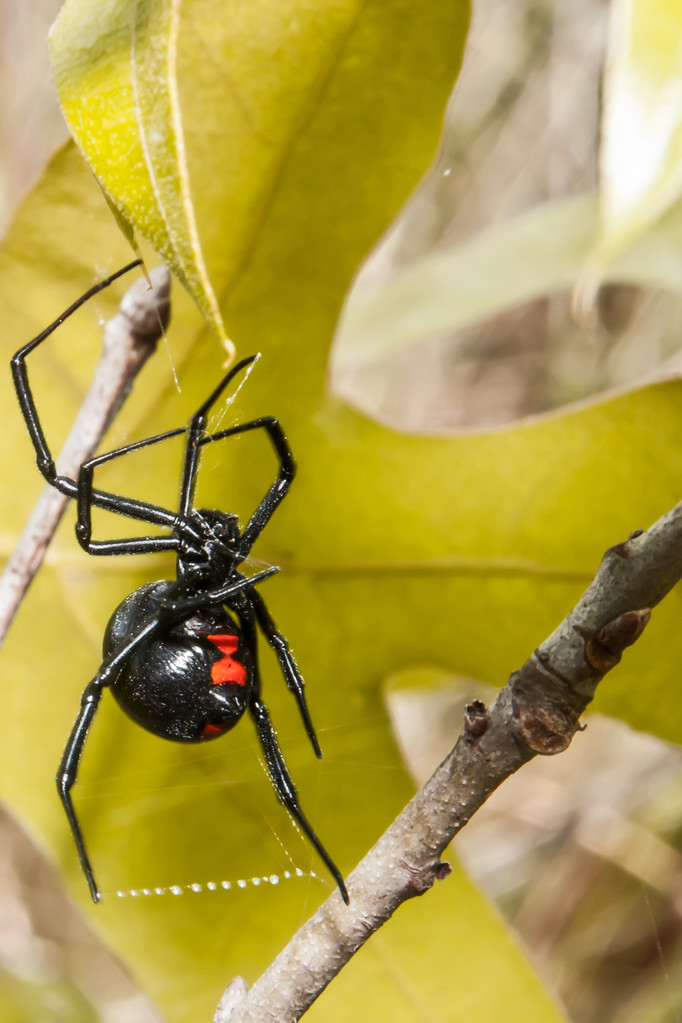
- The Black Widow: Look for a jet-black, highly shiny body with a distinct red or orange hourglass marking on the underside of the belly. They build tangled, messy, incredibly strong webs that crackle when broken. They prefer low-level, dark environments like crawlspaces, woodpiles, and entry doors.
- The Brown Recluse: Look for a dull tan to dark brown body with a dark fiddle or violin shape on its back behind the head. They build loose, sticky webs completely hidden from view. They prefer dry, undisturbed storage areas like cardboard boxes, closets, and attics.
1. The Black Widow
Female black widows are easy to spot: they are jet-black, incredibly shiny, and carry a bright red or orange hourglass marking on the underside of their bulbous abdomen.
In my decades on the job, I find these most often around perimeter trip hazards: lowest levels of homes, dark crawlspace entries, beneath water meter covers, and inside undisturbed woodpiles right next to the foundation.
Their webs are distinct. They are not beautiful, symmetrical webs. They are messy, tangled, and look like a bird’s nest of chaos. The silk is so strong that you can actually hear it “crackle” if you pull a stick through it.
2. The Brown Recluse
The brown recluse is dull tan to dark brown with a distinct, dark violin-shaped marking on its back behind the head. However, don’t rely strictly on that mark, as many harmless spiders look similar.
These spiders are reclusive by nature. They love dry, completely undisturbed storage zones. I routinely find them inside old cardboard boxes stored in attics, tucked inside winter shoes left in dark closets, or behind wall voids.
Note: Brown recluses have a specific geographic footprint centered primarily in the southern and central Midwest regions. If you live in the Northeast or Pacific Northwest, it is highly unlikely that the brown spider on your wall is a recluse.
👉👉 Having Spiders in Your Basement or Garage? How to Get Rid of Them Fast!
Why Spiders Are Choosing Your House
Spiders do not break into your home just to terrorize you. They are cold-blooded opportunists following resources.
- The Pest Food Supply: If you have spiders, you have other insects. Spiders go where the food is abundant. Eliminate the ants, flies, and silverfish, and the spiders will starve or leave.
- Exterior Lighting Traps: Standard porch lights attract flying insects directly to your doors and windows at night. Spiders set up their webs right next to these lights because it is an all-you-can-eat buffet.
- Unsealed Voids: Over time, plumbing penetrations under sinks, gaps under door sweeps, and unsealed crawlspace vents give spiders a wide-open highway into your living spaces.
🛒🛒 Click the Image Below to Buy the Exact Glue Traps that We Use in the Field to Eliminate Spiders 👇👇👇👇

The Veteran’s Professional Spider Prevention Checklist
When I evaluate a home with a severe spider problem, I don’t just walk around spraying individual bugs. You have to break the environment. Use this exhaustive checklist to lock down your home.
Step 1: Secure the Exterior Envelope
- Upgrade Your Lighting: Swap out your bright white exterior porch bulbs for warm yellow LED bulbs. Yellow light spectrums do not attract night-flying insects, starving out the spiders waiting near your doors.
- Clear the Foundation Zone: Cut back all bushes, shrubs, and tree branches so they sit at least 18 inches away from your siding. Vegetation acts as a natural bridge for spiders to crawl directly onto your structure.
- Elevate Firewood: Move woodpiles at least 20 feet away from the home and store them off the ground. This removes the absolute favorite breeding ground of the black widow.
Step 2: Seal the Entry Points
- Replace Door Sweeps: If you can see even a sliver of daylight under your exterior doors or garage entry doors, a wolf spider can easily slide through. Install heavy-duty rubber door sweeps immediately.
- Foam the Utility Gaps: Go under your kitchen and bathroom sinks. Use expanding foam or copper mesh to completely plug the gaps around the plumbing pipes where they enter the walls.
Step 3: De-Clutter and Document Storage
- Ditch the Cardboard: Brown recluses love the organic glue used to hold cardboard boxes together. Switch out your cardboard storage boxes in the attic, basement, or garage for heavy-duty plastic tote boxes with tight-locking lids.
- Shake Out Seasonal Gear: Never put on shoes, boots, or heavy work gloves that have been sitting undisturbed in a dark garage or closet without shaking them out vigorously first.
Step 4: Mechanical Removal
- Web-Wipe Regularly: Do not just step on a spider and leave the web. Use a firm extension pole or a vacuum attachment to pull down webs and egg sacs the moment you see them. Destroying the egg sacs is the only way to stop the next generation from hatching inside your walls.
When to Call in the Pros
If you are dealing with an occasional rogue spider, following the checklist above will solve your issue. However, if you are consistently seeing multiple adult spiders every single week, finding active egg sacs in your living areas, or suspect you have a deeply entrenched black widow or brown recluse infestation, you need to bring in professional help. A persistent population means there is a hidden structural issue or an underlying insect infestation providing a massive food source that needs to be systematically eliminated.
Disclaimer: The information provided in this guide is for educational and preventative purposes only. If you or a family member suspect you have been bitten by a medically significant spider like a Black Widow or Brown Recluse, seek professional medical attention immediately. Do not rely on internet images to diagnose a venomous bite.