Last Updated on September 27, 2026 by Tim L. | Founder of Pest Control Playbook | Reviewed for Scientific Accuracy by our Co-Founder, an Associate Certified Entomologist (ACE)
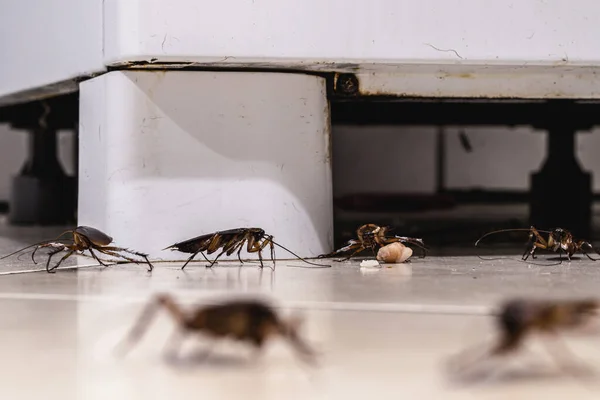
If you have been battling a stubborn cockroach infestation without success, you are likely looking for solutions that actually work. Many homeowners waste time and money on retail bug bombs and heavy chemical sprays that only cause roaches to scatter deeper into wall voids and appliances.
True cockroach eradication relies on biology, precision behavior targeting, and commercial-grade product combinations. Backed by a combined 40+ years of professional pest management experience and certified entomology insights, this guide provides the exact step-by-step playbook used by master technicians to eliminate roach populations permanently.
💡 Professional Affiliate & Editorial Disclosure
Some links on this page are affiliate links, meaning a small commission may be earned on recommended professional-grade products (like pressurized backpack sprayers, professional roach baits, or exclusion materials) at no extra cost to you.
The 3-Step Professional Eradication Kit
To bypass trial-and-error, our technicians recommend a commercial protocol involving non-repellent sprays, high-attractant baits, and insect growth regulators (IGRs).
- The Core Non-Repellent Spray: Alpine WSG Liquid Concentrate — This non-repellent spray cannot be detected by roaches, meaning they walk right through it and carry it back to the nest without scattering.
- The High-Attractant Bait Rotation: Syngenta Advion Roach Gel Bait or Vendetta Plus Roach Gel Bait — These baits mimic high-protein food sources and leverage the natural cannibalistic behavior of the colony.
- The Population Breaker (IGR): Gentrol IGR Concentrated Liquid or Tekko Pro IGR — These growth regulators stop immature nymphs from morphing into breeding adults, rendering them sterile.
🛒🥇 If you are searching for an All-in-One Roach Elimination Kit, 👇👇 this is a great option that comes with a concentrate, IGR’s, roach baits, and glue traps 👇👇 (CA/NY Compliant)

The Secret Weapon: Understanding the Domino Effect
The biggest mistake DIYers make is trying to kill roaches instantly on contact. If you spray a roach with a standard retail aerosol, you only kill that single insect.
Professional exterminators rely on transfer mechanics and the cascading domino effect. When a foraging nymph or adult feeds on a premium gel bait, the active ingredient does not kill them right away. Instead, the roach returns to its hidden harborage deep inside a wall void or appliance.
Because cockroaches are coprophagous (they eat roach droppings) and cannibalistic (they eat their dead), the bait transfers horizontally through the population. One single roach feeding on gel bait can inadvertently eliminate dozens of hidden roaches back at the nesting site. If you use a contact-kill spray, you break this vital chain.
👉👉 If you are Seeing Roaches During the Day, Read THIS Article Now to find out How to Get Rid of Them Fast
Step 1: Perform a Detail-Driven Inspection
Before you touch a single piece of equipment, you must find out exactly where the epicenter of the activity is located. Roaches do not wander aimlessly; they cluster near heat, high humidity, and darkness.
Micro-Harborage Hotspots to Check
- The Kitchen Fridge: Inspect the rear compressor unit and the rubber magnetic door gaskets. The heat from the motor creates a perfect incubator.
- Under-Sink Plumbing: Check where the pipes penetrate the drywall. Gaps around these cutouts are structural superhighways.
- Dishwasher Gaps: The lingering moisture and insulation behind a dishwasher create prime roach territory.
- Cabinet Hinges: German cockroaches love to wedge themselves directly into the tight metal crevices of kitchen cabinet hinges.
Step 2: Target the Species Biology
Different roaches require vastly different treatment strategies. Treating an outdoor perimeter roach like an indoor hitchhiker will cause your program to fail.
German Cockroaches
German roaches are small and light brown with two dark parallel stripes running down the pronotum behind the head. They are strictly indoor pests. They reproduce faster than almost any other insect, with a single female producing an egg capsule containing up to 40 eggs every few weeks. The strategy requires high-density interior baiting, non-repellent sprays, and mandatory IGR applications.
American Cockroaches
American roaches are large and reddish-brown, often reaching up to two inches in length with a yellowish figure-eight pattern on the head capsule. They primarily live in sewers, storm drains, steam tunnels, and damp crawl spaces, entering homes through drains or lower-level entry points. The strategy requires large-scale granular baits, perimeter liquid barriers, and mechanical exclusion gaps.
Step 3: Starve Them Out (Sanitation and Moisture Control)
A bait application is only as good as its competition. If your kitchen counters are covered in grease, crumbs, and standing water, roaches will completely ignore your professional-grade gel baits.
- De-Grease Stoves and Ovens: Roaches can live for weeks on a single drop of dried grease behind a stove.
- Seal Dry Goods: Transfer cereals, pet foods, and baking items into hard plastic containers with airtight seals.
- Dry Up Water Sources: Wipe out sinks before bed, fix dripping faucets immediately, and empty pet water bowls overnight.
Step 4: Apply Products with Precision Tactics
When it comes to cockroach baiting, less is more. Smearing a massive line of bait across a counter is ineffective. Roaches will avoid it entirely, and the outer layer will quickly dry up into a useless crust.
- Placement Size: Apply bait in tiny, pea-sized dots or thin 1/4-inch beads directly into cracks, crevices, and corners.
- Spacing: Space placements roughly 6 to 12 inches apart along the tracks of kitchen cabinets, behind appliances, and around plumbing lines.
- Void Treatments: Use an insecticidal dust inside structural wall voids. Use a hand duster to apply a micro-thin layer. If you can see a white pile of dust, you applied too much because roaches will simply walk around it.
Step 5: Monitor and Adjust via Glue Boards
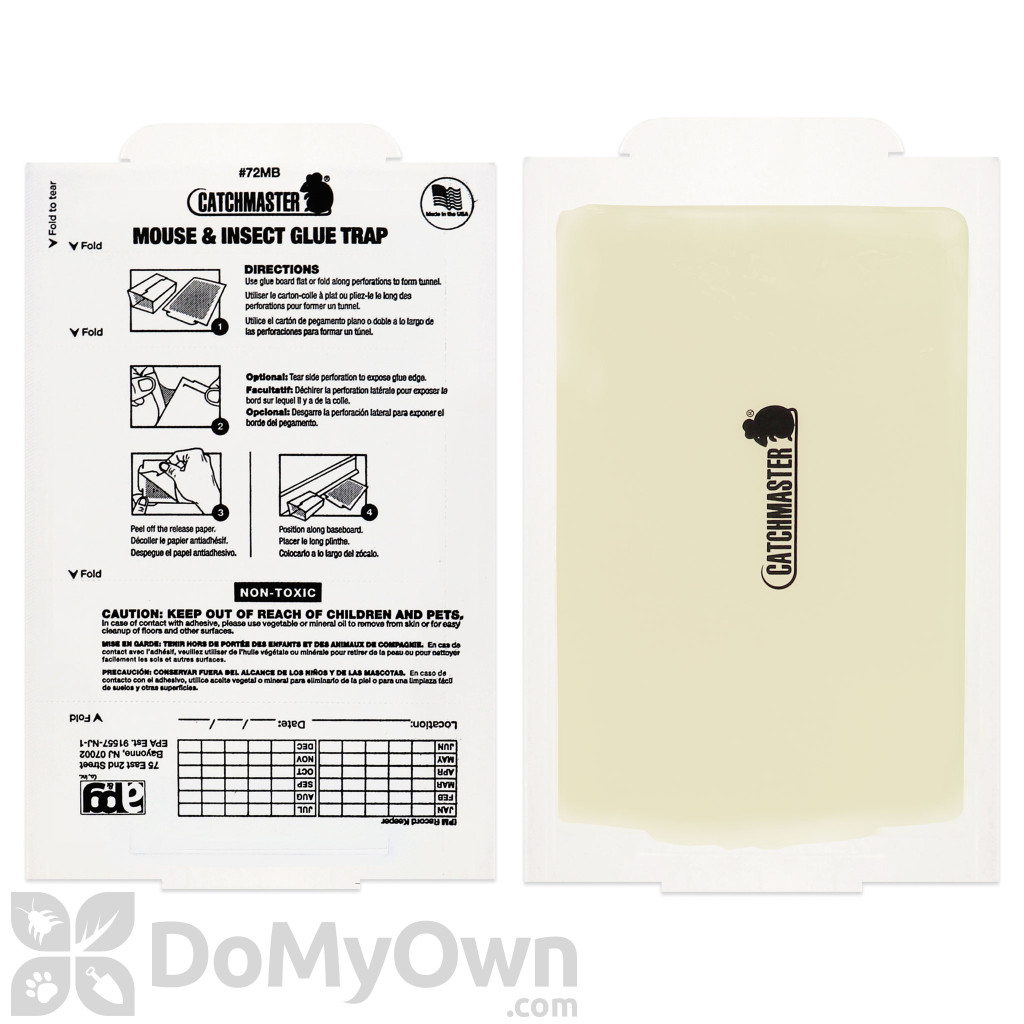
You cannot manage what you do not measure. Sticky traps are not designed to capture the whole infestation; they are tracking tools. Below are the exact glue traps we prefer to use in the field for roach infestations.
Place sticky glue monitors in the corners of cabinets and directly behind appliances. Check them weekly. If Trap A captures 45 roaches and Trap B captures 2 roaches, you know your primary nesting zone is right next to Trap A. This allows you to focus your remaining bait and product placements where they will do the most damage.
Frequently Asked Questions
Why am I seeing more roaches after applying gel bait?
This is actually a sign that your treatment is working perfectly. Professional gel baits contain powerful food attractants that draw roaches out from deep inside their hidden wall harborages. Do not spray them with contact killers when you see this. Let them eat the bait and carry it back to the colony.
Can I use retail bug bombs or foggers?
Absolutely not. Total-release foggers do not penetrate the deep wall voids and appliance motors where roaches actually nest. Instead, the oily, repellent residue they leave behind forces the roaches to scatter deeper into the structure, often pushing them into bedrooms, closets, and neighboring units.
How long does it take to completely get rid of a roach infestation?
A small or minor roach infestation can see a massive drop in population within 7 to 14 days. However, a severe, well established German cockroach infestation typically takes a minimum of 3 to 6 weeks to gain control. This timeline is necessary to allow all hidden egg capsules to hatch and encounter your applied residual products and IGRs.
Will freezing or heat kill cockroach eggs?
While extreme temperatures can neutralize roaches, their egg cases are remarkably resilient shields. This is why chemical insect growth regulators (IGRs) are vital. They physically disrupt the molting process of the young nymphs once they emerge from the egg case, preventing them from ever reproducing.