
Last Updated on July 27, 2026 by Tim L. | Founder of Pest Control Playbook
Think you may have cockroaches? Learn the most common signs of a cockroach infestation, how to identify them early, and what to do before the problem gets worse.
Signs of a Cockroach Infestation
Cockroaches are experts at staying out of sight. By the time you actually see one running across your kitchen floor, dozens—or even hundreds—may already be hiding inside your home.
The good news is that cockroaches leave behind plenty of evidence if you know what to look for.
With decades of hands-on pest control experience, I’ve found that homeowners usually notice several warning signs before they ever see large numbers of roaches. Catching these clues early can make the difference between a small treatment and a major infestation.
Here’s how to tell if cockroaches have moved into your home.
Quick Answer
💡💡👉👉 The most common signs of a cockroach infestation include:
- Seeing live cockroaches, especially during the day
- Cockroach droppings
- Egg cases (oothecae)
- A musty, oily odor
- Smear marks on walls or surfaces
- Shed skins
- Damage to food packaging
- Dead cockroaches
- Roaches hiding around water sources
- Increasing sightings over time
If you notice more than one or two of these signs, it’s time to begin treatment before the infestation grows.
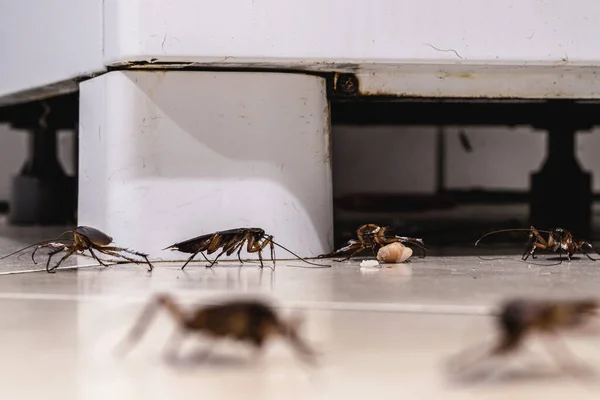
1. Seeing Live Cockroaches
The most obvious sign is seeing live roaches.
Many homeowners assume spotting one cockroach isn’t a big deal.
Unfortunately, that’s often not true.
Cockroaches are nocturnal insects that spend most of the day hiding in cracks, behind appliances, inside cabinets, and under sinks.
If one runs across your floor at night, there are often many more hidden nearby.
Even worse is seeing cockroaches during the daytime.
Daytime activity often means their hiding places have become overcrowded, forcing some roaches into the open.
Related: Link to your Does One Roach Mean an Infestation? article.
2. Cockroach Droppings
Droppings are one of the earliest clues.
Depending on the species, droppings may look like:
- Black pepper
- Coffee grounds
- Tiny black cylinders
- Small dark pellets
You’ll usually find them:
- Under sinks
- Behind refrigerators
- Inside cabinets
- Along baseboards
- Under stoves
- Around pantries
Large numbers of droppings almost always indicate an active infestation.
3. Egg Cases (Oothecae)
Female cockroaches produce egg capsules called oothecae.
These brown capsules resemble small bean-shaped cases about a quarter-inch long.
Finding even one egg case means reproduction has already started.
Common locations include:
- Behind appliances
- Inside cabinets
- Storage boxes
- Closets
- Utility rooms
Removing egg cases helps reduce future populations but rarely solves the infestation by itself.
4. A Strong Musty Odor
Heavy infestations often create a distinctive smell.
Many people describe it as:
- Musty
- Oily
- Damp
- Sour
- Stale
The odor comes from chemicals cockroaches produce to communicate with one another.
As the infestation grows, the smell usually becomes stronger.
Professional technicians often notice the odor immediately upon entering heavily infested homes.
👉💡 Want to Know How to Find a Cockroach Nest? Read THIS
5. Smear Marks
Cockroaches frequently travel through damp areas.
When they crawl across surfaces, they can leave behind dark smear marks.
Look around:
- Baseboards
- Corners
- Behind sinks
- Wall-floor junctions
- Plumbing penetrations
Smears are especially common in humid environments.
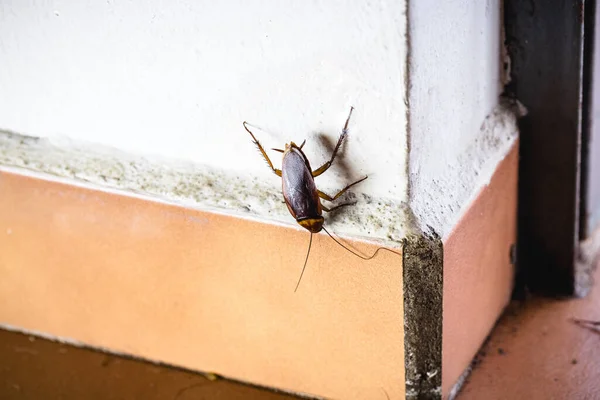
6. Shed Skins
As cockroaches grow, they molt several times before becoming adults.
Each molt leaves behind a thin, light-brown shell that looks remarkably like a dead cockroach.
You’ll often find shed skins in the same areas where cockroaches hide.
If you keep finding fresh molts, the colony is actively growing.
7. Damaged Food Packaging
Cockroaches eat almost anything.
Signs include:
- Tiny chew holes
- Torn cardboard
- Damaged cereal boxes
- Open pet food bags
- Food contamination
Always inspect pantry items if you suspect cockroaches.
Store dry goods in airtight containers whenever possible.
8. Dead Cockroaches
Finding dead roaches may sound like good news.
Sometimes it is.
However, repeatedly finding dead cockroaches often means there are many more living nearby.
Dead insects commonly appear near:
- Windows
- Basements
- Utility rooms
- Under appliances
If you keep finding them week after week, investigate further.
9. Roaches Near Water
Cockroaches need moisture to survive.
One of the first places I inspect during a service call is around water sources.
Check:
- Under bathroom sinks
- Kitchen sinks
- Water heater rooms
- Laundry rooms
- Dishwasher
- Refrigerator water lines
Leaks provide ideal conditions for cockroach populations to expand.
10. The Number Keeps Increasing
Perhaps the biggest warning sign is simply seeing cockroaches more often.
One sighting every few months is very different from:
- One every week
- One every day
- Several every night
Cockroach populations multiply quickly.
If sightings become more frequent, the infestation is usually growing rather than disappearing on its own.
👉💡 How Long Does it Take to Get Rid of Roaches? A 30 Year Professional Explains
What Should You Do If You Notice These Signs?
The earlier you act, the easier cockroaches are to eliminate.
Start by:
- Eliminating food and water sources
- Fixing plumbing leaks
- Sealing cracks and entry points
- Vacuuming droppings and egg cases
- Using professional-quality cockroach baits
- Adding an insect growth regulator (IGR) to stop reproduction
Avoid relying on bug bombs or excessive spraying. These methods often scatter cockroaches deeper into walls instead of eliminating the colony.
When to Call a Professional
DIY treatments work well for many small infestations.
However, professional treatment may be the better choice if:
- You see cockroaches during the day.
- You continue finding fresh droppings after treatment.
- Roaches are spreading into multiple rooms.
- You discover large numbers of egg cases.
- The infestation returns repeatedly.
Professionals have access to commercial products and treatment strategies that are often more effective than over-the-counter options.

Frequently Asked Questions
Does seeing one cockroach always mean an infestation?
Not always, but it shouldn’t be ignored. One cockroach can sometimes wander indoors, but it can also be the first visible sign of a much larger hidden population. If you continue seeing roaches or notice droppings, egg cases, or other warning signs, an infestation is much more likely.
What is the earliest sign of a cockroach infestation?
Cockroach droppings are often the first clue. Many homeowners notice small black specks under sinks, behind appliances, or inside cabinets before they ever see a live roach.
What do cockroach droppings look like?
Small cockroach droppings resemble black pepper or coffee grounds. Larger species leave dark, cylindrical droppings that may look similar to mouse droppings but are usually smaller and have blunt ends.
Can you smell a cockroach infestation?
Yes. Larger infestations often produce a musty, oily odor caused by chemicals the cockroaches release. The smell becomes more noticeable as the population grows.
How quickly can a cockroach infestation grow?
German cockroaches reproduce extremely quickly. Under favorable conditions, a small problem can become a major infestation within a few months, which is why early detection and treatment are so important.
Final Thoughts
Cockroaches are excellent at hiding, but they rarely remain completely invisible. Droppings, egg cases, shed skins, odors, and increasing sightings are all signs that a colony may already be established inside your home.
The sooner you recognize these warning signs, the easier it is to stop the infestation before it becomes much larger. Combining good sanitation, moisture control, quality baits, and an insect growth regulator can eliminate many infestations without allowing the population to continue growing.