Last Updated on September 9, 2026 by Tim L. | Founder of Pest Control Playbook | Reviewed for Scientific Accuracy by our Co-Founder, an Associate Certified Entomologist (ACE)
Wondering how professional exterminators get rid of roaches? Learn the proven methods pest control professionals use, from inspection and baiting to insect growth regulators and follow-up treatments, based on 30 Years of Industry Experience.
How Do Professional Exterminators Get Rid of Roaches?
If you’ve been battling cockroaches without success, you’ve probably wondered what professional exterminators do differently.
Many homeowners picture a pest control technician arriving with a sprayer and coating every room with chemicals. While that may have been common years ago, modern cockroach control is much more strategic, using a combination of quick kills, residuals, roach bait, insecticide dusts, IGRs, traps and more.
Professional exterminators focus on understanding how cockroaches live, where roaches hide, and how to eliminate the entire population—not just the ones you see crawling across the floor.
With decades of hands-on pest control experience, I’ve found that successful cockroach control almost always comes down to the same process: a thorough inspection, targeted treatment, and consistent follow-up.
Here’s how professional exterminators get rid of roaches.
Quick Answer
💡👉 Professional exterminators get rid of cockroaches by:
- Performing a detailed inspection
- Identifying the cockroach species
- Locating food, water, and hiding places
- Applying professional-quality gel baits
- Using insect growth regulators (IGRs)
- Treating cracks and wall voids with insecticidal dust
- Sealing entry points when necessary
- Monitoring activity with glue boards
- Returning for follow-up inspections and treatments
Rather than relying on heavy spraying, professionals use a combination of products and techniques that target the entire colony.
Step 1: Perform a Thorough Inspection
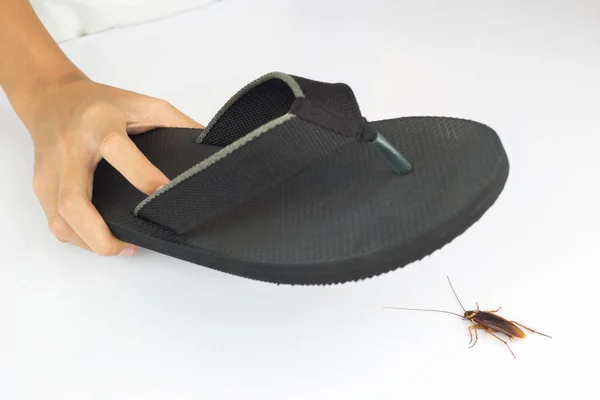
The first step in any professional treatment is inspection.
Before applying any products, an experienced technician spends time looking for signs of activity. The inspection often determines where treatments will be most effective.
Common inspection areas include:
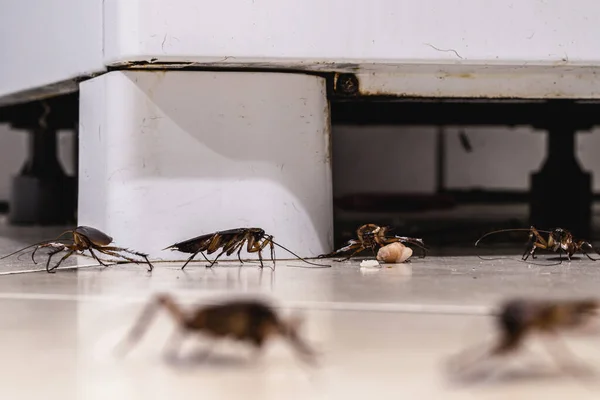
- Behind refrigerators
- Behind stoves
- Under sinks
- Inside kitchen cabinets
- Around dishwashers
- Laundry rooms
- Utility rooms
- Bathrooms
- Basements
- Crawl spaces
During the inspection, technicians look for droppings, egg cases, shed skins, smear marks, live cockroaches, and moisture problems.
A good inspection saves time and usually produces much better results than treating the entire house blindly.
Step 2: Identify the Cockroach Species
Not every cockroach behaves the same way.
Identifying the species helps determine where they hide and which treatment methods will work best.
Some of the most common household species include:
German Cockroaches
German cockroaches are the most common indoor species. They reproduce quickly and usually hide in kitchens, bathrooms, and other warm areas close to food and water.
American Cockroaches
American cockroaches are much larger and often enter homes from sewers, crawl spaces, or outdoors. They prefer damp environments such as basements and utility rooms.
Oriental Cockroaches
Oriental cockroaches thrive in cool, damp areas and are commonly found around drains, crawl spaces, and foundation walls.
Brown-Banded Cockroaches
Unlike German cockroaches, brown-banded cockroaches often hide in higher locations such as cabinets, furniture, closets, and electronics.
Knowing which species you’re dealing with helps determine where to place bait and where to focus treatment efforts.
Step 3: Eliminate Food and Water Sources
Professional exterminators know that pesticides alone rarely solve a cockroach problem.
Food and moisture allow cockroaches to survive and continue reproducing.
During a service visit, technicians often recommend:
- Cleaning food spills promptly
- Storing food in sealed containers
- Removing grease buildup
- Emptying trash regularly
- Repairing plumbing leaks
- Reducing excess moisture
- Limiting clutter around appliances
Even the best treatment works better when cockroaches have fewer food and water sources available.
Step 4: Apply Professional-Grade Gel Baits
Gel bait is one of the most effective tools professionals use today.
Rather than killing roaches on contact, bait encourages cockroaches to feed and carry the toxicant back to their hiding places.
Other cockroaches are then exposed through feeding on droppings, regurgitated food, or dead roaches, allowing the bait to spread through the population.
Common bait placement areas include:
- Cabinet hinges
- Under sinks
- Behind refrigerators
- Behind stoves
- Around plumbing penetrations
- Inside wall voids
- Under countertops
Professionals use small, targeted placements instead of applying large amounts.
👉👉👉 Read All About The Best Roach Gel Baits HERE
Step 5: Use Insect Growth Regulators (IGRs)
One of the biggest differences between professional and DIY treatments is the use of insect growth regulators.
An IGR doesn’t usually kill adult cockroaches immediately.
Instead, it interferes with their development and reproduction.
Benefits include:
- Prevents immature roaches from reaching adulthood
- Reduces future breeding
- Breaks the life cycle
- Helps eliminate infestations faster when combined with bait
IGRs are especially valuable for German cockroach infestations because of their rapid reproductive rate.
👉👉👉 Read THIS Article About The Best IGRs For Roaches
Step 6: Apply Insecticidal Dust to Hidden Areas
Professional exterminators often use insecticidal dust where sprays and baits aren’t practical.
Dust works well because it remains effective in protected areas for long periods.
Common treatment locations include:
- Wall voids
- Behind electrical outlets
- Plumbing penetrations
- Behind cabinets
- Under appliances
- Crawl spaces
Cockroaches pick up the dust as they travel through these areas and carry it back to their hiding places.
Dust should only be applied in thin layers. More is not better.
👉👉👉 Want to Know More About Insecticide Dusts? Read THIS Article Now
Step 7: Place Sticky Monitors
Glue boards aren’t just traps.
Professionals use them to monitor activity.
Sticky monitors help determine:
- Where cockroaches are traveling
- Which rooms have the highest activity
- Whether treatments are working
- Whether additional bait placements are needed
Monitoring allows technicians to adjust treatments instead of guessing.
Step 8: Schedule Follow-Up Treatments
Many homeowners expect one treatment to solve the problem.
Unfortunately, severe infestations usually require more than one visit.
Follow-up appointments allow technicians to:
- Replace consumed bait
- Inspect new activity
- Check glue boards
- Treat newly hatched cockroaches
- Evaluate sanitation improvements
Patience is often part of successful cockroach control.
Why Professionals Don’t Just Spray Everything
One of the biggest misconceptions about pest control is that spraying more insecticide produces better results.
In reality, excessive spraying can create problems.
Some sprays repel cockroaches, causing them to scatter deeper into walls and harder-to-reach hiding places.
Spraying directly over gel bait can also contaminate the bait and make it less attractive to cockroaches.
Modern cockroach control focuses on precision rather than quantity.
Common Mistakes Homeowners Make
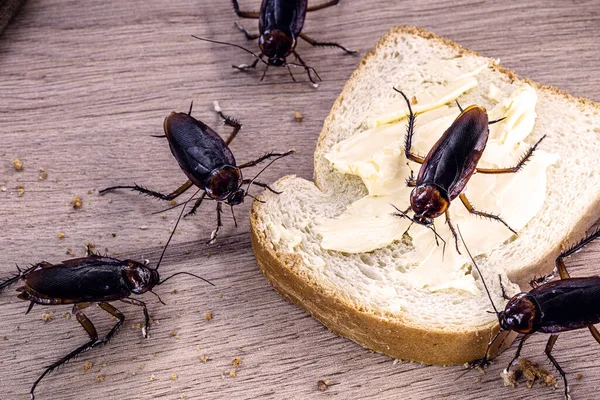
Many infestations become worse because of well-intentioned mistakes.
Common examples include:
- Using bug bombs
- Spraying over gel bait
- Applying too much insecticide
- Ignoring plumbing leaks
- Leaving food available overnight
- Giving up too soon
- Treating only the rooms where cockroaches are seen
Professional treatments address the entire infestation instead of just the visible insects.
Can You Get Professional Results Yourself?
In many cases, yes.
Small or moderate infestations can often be eliminated by homeowners who use high-quality products correctly and remain patient throughout the treatment process.
The keys to success include:
- Using professional-quality gel bait
- Adding an insect growth regulator
- Applying insecticidal dust to appropriate areas
- Maintaining good sanitation
- Reducing moisture
- Monitoring progress with sticky traps
However, severe infestations, apartment buildings, or recurring problems often require professional assistance.
How Long Does Professional Treatment Take?
The timeline depends on the size of the infestation.
Small infestations may show significant improvement within one to three weeks.
Larger German cockroach infestations often require several weeks or longer before the entire population is eliminated, especially if egg cases continue to hatch.
Successful treatments focus on long-term control rather than overnight results.
Frequently Asked Questions
Do exterminators spray every room?
Usually not. Most professionals concentrate treatments where cockroaches live and travel rather than spraying every room unnecessarily.
Why do I see more roaches after treatment?
It’s common to notice increased activity for a short time after treatment. Cockroaches often leave their hiding places as they encounter bait or treated areas.
Are professional products stronger than store-bought products?
Many professional products are more effective because they’re designed for targeted applications and are used as part of an integrated treatment program rather than relying on a single product.
Is one treatment enough?
Minor infestations sometimes respond to a single visit, but moderate and severe infestations often require follow-up inspections and additional bait placements.
Can I stay in my home during treatment?
In many cases, yes. Modern cockroach treatments frequently rely on targeted bait placements and localized applications instead of widespread spraying. Your pest control company will provide any specific instructions based on the products being used.

Final Thoughts
Professional exterminators don’t eliminate cockroaches by simply spraying insecticide throughout a home. They rely on a systematic approach that combines careful inspection, species identification, sanitation, targeted gel baits, insect growth regulators, insecticidal dust, and ongoing monitoring.
By focusing on the entire colony instead of just the roaches you see, professionals can eliminate infestations more effectively and reduce the chances of the problem returning.
Whether you decide to tackle the problem yourself or hire a professional, understanding this process will help you make smarter decisions and achieve better long-term results.