Last Updated on September 17, 2026 by Tim L. | Founder of Pest Control Playbook | Reviewed for Scientific Accuracy by our Co-Founder, an Associate Certified Entomologist (ACE)
Finding German cockroaches (Blattella germanica) scurrying around your dishwasher is enough to make any homeowner lose their appetite. Unfortunately, it is one of the most common issues encountered in the field.
With 42 combined years of pest control field experience alongside an Associate Certified Entomologist, our team has inspected thousands of kitchens. Homeowners almost always focus their DIY cleaning efforts on countertops, sinks, and pantry shelves, leaving the dishwasher completely overlooked.
If you are only seeing a couple of roaches when you run a wash cycle, running it again won’t solve the problem. To protect your kitchen and completely eliminate the nest, you need to understand exactly why they are there and execute a professional-grade DIY eradication protocol.
Professional Affiliate & Editorial Disclosure
💡Transparency Note: At Pest Control Playbook, our mission is to provide actionable, field-proven advice backed by 42 years of combined field experience. To keep our deep guides free and support the site, some of the links on this page are affiliate links. If you click through and buy a recommended professional-grade product, we may earn a small commission at no extra cost to you. We only recommend solutions we have personally used to solve real-world infestations in the field.
Why Are German Cockroaches Attracted to Your Dishwasher?
To a cockroach, your dishwasher is a five-star resort. It provides the exact environmental triggers that indoor roach species thrive on:
- Constant Radiated Heat: The electrical motor, internal heating elements, and water lines beneath the appliance create a warm micro-climate. This environment allows roaches to comfortably incubate their egg capsules (oothecae).
- The Food Micro-Layer: Even if you pre-rinse your plates, tiny food starches, grease, and organic debris collect in the dishwasher filter, drain hose, and rubber door seals over time.
- High Moisture & Condensation: Small water line leaks, loose fittings, or standard condensation from the drying vents provide a steady, endless supply of moisture. A roach can survive weeks without food, but a steady water source allows a colony to multiply exponentially.
The Pro DIY Audit: Where to Look Around the Machine
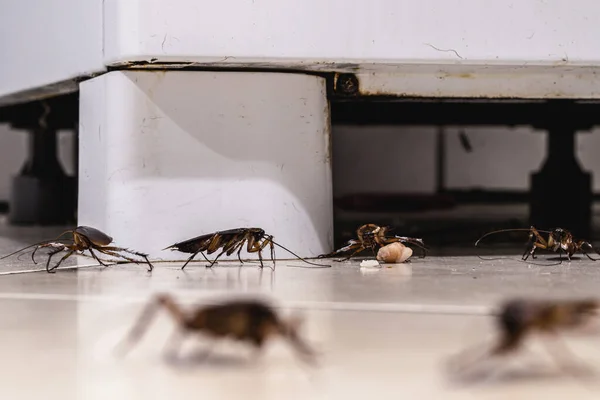
Most homeowners assume the roaches are living inside the tub itself. In reality, they are usually harboring in the tight structural voids surrounding the unit. Pull the kick-plate off the bottom front of your dishwasher or carefully slide the unit out to inspect these major zones:
- The Insulation Wrap: Most residential dishwashers are wrapped in a thick fiberglass or felt insulation blanket to reduce noise. Cockroaches love to burrow directly into this material to nest.
- Unsealed Wall Openings: Look directly behind the unit where the hot water line, drain line, and electrical wires pass through the drywall. If these penetrations aren’t sealed, roaches use them as a private highway system to travel behind your kitchen cabinets.
- The Base Frame & Drip Pan: Small drips from water valves pool undetected underneath the machine, creating a perfect harbor for adults and nymphs.
The 3-Step Professional DIY Elimination Method
Forget using cheap supermarket bug sprays. Spraying a contact aerosol around a dishwasher is the worst mistake a DIYer can make—the harsh chemicals will simply cause the roaches to scatter deeper into your walls, splitting the colony and making it harder to kill. Instead, use the exact tactics professionals use:
Step 1: Deep Clean the Appliance Traps
Pull out the lower rack and remove the cylinder dishwasher filter at the bottom of the tub. Wash it thoroughly with hot water and dish soap to remove trapped food slurry. Next, wipe down the thick rubber gaskets around the door frame with an enzyme cleaner or warm soapy water to remove hidden grease buildup.
Step 2: Apply Non-Repellent Gel Baits Correctly
Purchase a professional-grade cockroach gel bait containing active ingredients like Indoxacarb, Fipronil, or Clothianidin. Place small, pea-sized dots of bait directly along the cabinet framing junctions, near the plumbing penetrations under the sink, and right behind the dishwasher motor shroud. The roaches will eat the bait, carry it back to the hidden nesting sites, and eliminate the colony through a domino effect.
🛒🛒 Click to Purchase Advion Trio Below👇👇, It is the Exact Product We Use in the Field 👇👇

Step 3: Seal Up the Structural Access Points
Once your baiting has knocked down the main population, use food-grade silicone caulk to seal the gaps where your countertops meet the backsplash. Fill the wide drywall holes around your plumbing pipes with copper mesh or expanding foam to permanently lock them out of your kitchen voids.
Q: Can you put roach bait inside a dishwasher?
A: Never apply roach bait gel inside the actual wash tub or on the dish racks, as water cycles will wash the chemical poison away and contaminate your kitchenware. Instead, place small, pea-sized dots of professional gel bait externally on the cabinet framing junctions, under the sink plumbing lines, and directly behind the bottom kick-plate shroud where the roaches are actually nesting
Q: Why do I have roaches in my clean dishwasher?
A: Cockroaches do not hide in dishwashers just because a kitchen is dirty. They are drawn to clean dishwashers by the constant radiated motor heat, high moisture profiles, and the microscopic layer of food starches and grease that naturally collects inside the drain hose filters and rubber door gaskets over time
Q: How do you treat a dishwasher for German cockroaches?
A: To safely treat a dishwasher, you must target the hidden structural voids around the unit rather than spraying chemicals. Deep clean the cylinder filter traps with hot soapy water, pull off the front kick-plate to access the bottom frame, and apply a non-repellent professional gel bait directly along the appliance feet and wall plumbing penetrations
Q: Can cockroaches crawl through the dishwasher drain hose?
A: Yes, cockroaches can navigate through unsealed utility gaps, but they rarely crawl up through the inside of the wet drain hose itself due to check valves and water traps. Instead, they travel along the dry exterior of the flexible drain line, utilizing the wide, unsealed drywall holes behind the machine as an open highway between wall voids
When to Call in a Professional
While a systematic DIY baiting and sanitation strategy can successfully clean up a moderate dishwasher infestation, large or deeply entrenched colonies require professional-grade intervention. If you are experiencing heavy roach activity during the daytime, or if the infestation keeps bouncing back after a few weeks of treatment, it’s time to call in local backup.