Last Updated on September 15, 2026 by Tim L. | Founder of Pest Control Playbook | Reviewed for Scientific Accuracy by our Co-Founder, an Associate Certified Entomologist (ACE)
Finding a few ants marching across a concrete patio or traversing a commercial loading dock might seem harmless at first. However, in our 42 combined years of hands-on field experience—which includes the advanced technical guidance of an Associate Certified Entomologist—we know that visible exterior trails are never isolated incidents.
Steady outdoor ant activity almost always points to a massive, deeply entrenched underground or structural colony nearby. If you only focus on killing the individual worker ants you see on the surface, you are completely wasting your time and money.
To achieve permanent eradication, you must pivot from superficial contact spraying to a comprehensive colony-collapse strategy. Whether you are protecting a residential backyard where children play or safeguarding a commercial facility from strict health code violations, this field-tested guide breaks down the exact 9-step perimeter elimination protocol we use to stop outdoor infestations at the source.
💡 Professional Affiliate & Editorial Disclosure
Transparency Note: At Pest Control Playbook, our mission is to provide actionable, field-proven advice backed by 42 years of combined field experience. To keep our deep guides free and support the site, some of the links on this page are affiliate links. If you click through and buy a recommended professional-grade product, we may earn a small commission at no extra cost to you. We only recommend solutions we have personally used to solve real-world infestations in the field.
1. Trace the Foraging Trails to the Source
The single biggest mistake homeowners and facility managers make is immediately blasting an active ant line with over-the-counter aerosol sprays. When you do this, you erase the map.
Ants communicate via sophisticated pheromone pathways. Instead of spraying them, spend ten minutes observing their movement. Follow the trail in both directions to identify their operational hubs.
In our decades of field service, we routinely track these trails back to:
- Cracks and expansion joints in the concrete foundation.
- The soft soil beneath heavy landscape pavers, rocks, and slate walkways.
- Decaying landscape timbers, old tree stumps, and stacked firewood piles.
2. Deprive the Perimeter of Food Buffets
Ants are relentless, highly organized foragers. If your exterior perimeter offers an easy meal, scout ants will rapidly recruit the rest of the colony to establish a permanent path.
To break this cycle, you must strictly audit and sanitize the exterior property:
- Residential Control: Ensure all outdoor trash bins feature tight, rubber-sealed lids. Clean up fallen fruit from trees immediately and never leave pet food bowls exposed on decks or patios overnight.
- Commercial Control: Power-wash dumpster pads weekly to eliminate grease film, sugars, and organic liquid residue that act as a primary attractant for structural pests.
3. Resolve Structural Moisture Faults
Food is a powerful driver, but water is an absolute biological necessity for a colony. Ants are highly sensitive to desiccation (drying out) and will actively move closer to structural perimeters that offer reliable moisture.
From an entomological standpoint, fixing moisture issues is 50% of the battle. Ensure your roof gutters are free of debris and that downspout extensions discharge water at least 3 to 5 feet away from the foundation wall. Inspect outdoor spigots, irrigation lines, and HVAC condensation lines to guarantee they aren’t slowly saturating the soil directly against the structure.
4. Break the Aphid-Ant Symbiotic Circle
This is the most overlooked catalyst for severe outdoor ant surges. If you notice dense columns of ants traveling up and down the trunks of your ornamental trees or foundation shrubs, you are likely witnessing a biological partnership.
Aphids and scale insects feed on plant sap and excrete a sugary, highly concentrated waste product known as honeydew. Ants absolutely prize this sugar source. In fact, ants will aggressively farm, herd, and protect aphids from natural predators to secure a steady honeydew supply. Inspect the undersides of your plant leaves. If aphids are present, treating the plants to eliminate them will instantly cut off the primary food pipeline drawing ants to your walls.
5. Eliminate Vegetation Bridges
Your home or commercial building should be an isolated island. Trees, heavy shrubs, overgrown ivy, and tall ornamental grasses that directly touch your siding, roofline, or gutters act as a seamless, unhindered highway for pests.
Even if you have applied a flawless protective barrier to the ground level, ants can simply bypass it by walking across a single tree branch that touches your roof window. Maintain a strict 12-inch clear zone between all vegetation and the exterior structure. Trim branches back and clear dense ground cover away from the lower foundation line to make physical inspections simple.
6. Clear Hiding Places and Debris
Ants thrive in undisturbed, insulated environments where temperature and humidity remain stable. Accumulations of organic debris or stored goods directly against a building act as a perfect incubator for satellite nests.
Take the time to systematically clear out potential nesting harbors within 10 feet of the perimeter. Rake back thick layers of wood mulch that have compacted over the years, pull stored boards and logs away from the siding, and elevate firewood piles off the bare ground. Minimizing these nesting choices forces the ants to retreat further out into the yard, away from your entry doors.
7. Deploy Professional-Grade Granular Ant Bait
If you want to achieve complete colony collapse, you must utilize granular baiting. Contact sprays only eliminate the foraging workers, leaving the egg-laying queen completely safe deep underground. Professional granular baits combine a highly attractive food matrix with a slow-acting, delayed lethal ingredient. The workers collect the granules, mistake them for food, and transport them deep into the heart of the nest where it is shared systematically through the entire population.
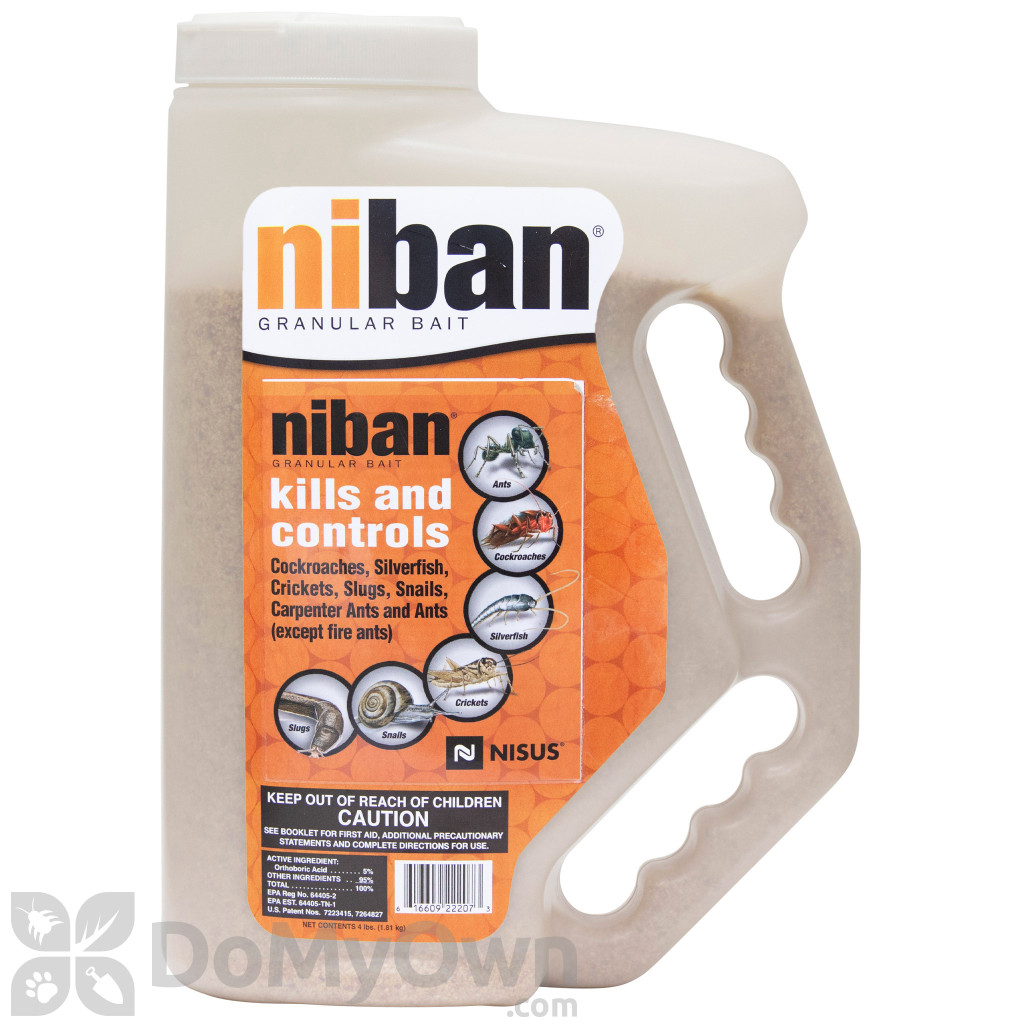
🛠️ Our Recommended Field Choice: Niban Granular Bait
- Why It Works: This weather-resistant granular bait doesn’t degrade quickly in the rain or sun. It provides a long-lasting, highly effective protective perimeter band that ants actively forage and bring back to the nest for total colony elimination.
Note: When using baits, you must be patient. If you see hundreds of ants swarming the granules, do not spray them! Let them work; they are actively carrying the elimination tool straight to the queen.
🛒🛒 To buy the exact product we use in the field, click the product image below to buy it from DoMyOwn! 👇👇👇
8. Execute Target Drenching for Exposed Nests
If your inspection successfully uncovers an active, exposed nest mound—whether under a landscape rock, inside a rotten stump, or along a sidewalk seam—you can execute a direct nest treatment.
For underground nests, standard surface misting is completely ineffective. A professional protocol requires a deep liquid drench or insecticidal dust injection directly into the core entry holes of the mound. This ensures the material physically penetrates the deep subterranean chambers where the brood and queens reside, halting reproductive capacity instantly.
9. Seal Structural Entry Points (Exclusion)
A comprehensive outdoor eradication strategy is completely hollow if you leave the front door wide open for the next colony. You must combine source population reduction with strict mechanical exclusion.
Walk the entire exterior perimeter with a high-quality sealant and expanding foam. Focus heavily on sealing expansion joints where concrete slabs meet the foundation, cracks in brick mortar, gaps around exterior utility penetrations (cables, pipes, wires), and worn, damaged weatherstripping beneath doors and garage entry bays.
Direct Comparison: Pest Species Behavior Matrix
Understanding your specific target pest changes your tactical execution. Here is how the most common exterior ants stack up in real-world environments:
| Ant Species | Primary Nesting Habitat | Standout Food Preference | Risk Level to Structure |
|---|---|---|---|
| Carpenter Ants | Damp, decaying wood; hollow trees; wall voids | Honeydew; dead insects; structural moisture | Severe (Causes significant wood damage) |
| Odorous House Ants | Shallow soil; under mulch; beneath rocks | Sweets; honeydew; plant secretions | Moderate (Massive indoor invader) |
| Pharaoh Ants | Deep structural voids; commercial kitchens | High-protein scraps; fats; sugars | High (Splits into satellite nests if sprayed) |
| Pavement Ants | Sidewalk cracks; under driveways; slab perimeters | Greasy foods; proteins; dead bugs | Low (Mainly a nuisance forager) |
The Professional Verdict: Balancing the Perimeter Strategy
Total outdoor ant eradication is never achieved with a single chemical application. It requires a balanced combination of proactive sanitation, vegetation management, proper mechanical exclusion, and targeted professional-grade baiting.
If you are dealing with a severe, structural ant surge that continues to bypass your perimeter controls, do not waste money on endless cans of retail consumer spray. Those repellent formulas will only cause advanced budding—a biological process where the colony panics, splits, and forms multiple satellite nests around your property, worsening the problem. Bring in a professional who understands pest biology and integrated pest management (IPM) to clear the problem safely and permanently.
👉👉 Is your Ant Bait Not Working? Read THIS Article to find out why