
Last Updated on May 8, 2026 by Tim L. | Founder of Pest Control Playbook
Tiny Ants. Big Problem.
If you’ve suddenly started seeing ants marching across your kitchen counter, bathroom sink, or floorboards, you’re not alone. Ant infestations are one of the most common pest problems homeowners deal with — especially during warmer months.
With over 30 years of hands-on pest control experience, I can tell you this:
Most people only kill the ants they can see.
The real problem is the colony hidden behind your walls, under your foundation, or somewhere outside your home, not just the visible ants in the house.
And unless that colony is eliminated, the ants usually come right back.
Why Are Ants Coming Into Your House?
Ants enter homes for three main reasons:
👉 Food
👉 Water
👉 Shelter
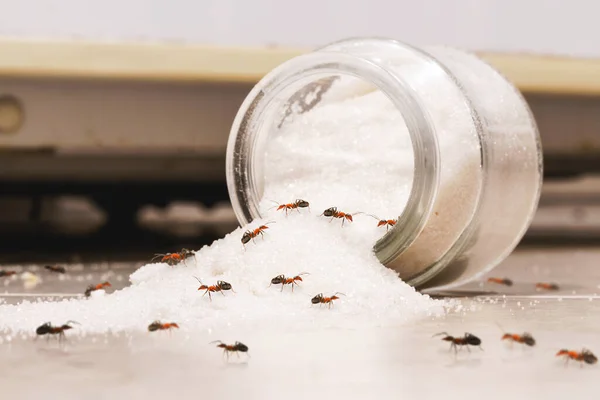
Once a scout ant finds one of those things, it leaves behind a chemical trail that leads the rest of the colony directly to the source.
That’s why you’ll often see long ant trails moving in a straight line across counters, windows, or baseboards.
Even tiny crumbs or a small water leak can attract hundreds of ants.
The Most Common Places Ants Show Up
Homeowners usually notice ants in:
- Kitchens
- Bathrooms
- Laundry rooms
- Around pet food
- Near windows and doors
- Under sinks
- Around garbage cans
And in many cases, the colony itself may actually be outside the home while workers travel indoors searching for food.
💰💰💰💰 PRO TIP! Always Use Ant Baits! Read more about them HERE
What Type of Ants Are You Seeing?
Different ants require different treatment methods.
Some of the most common household ants include:
Odorous House Ants
These tiny ants give off a rotten coconut smell or orange like smell when crushed and are heavily attracted to sweets.
Pavement Ants
Often found near sidewalks, driveways, foundations, and cracks in concrete.
Carpenter Ants
Much larger than most ants. These can damage wood and are sometimes mistaken for termites.
Pharaoh Ants
Very tiny yellowish ants commonly found in apartments, hospitals, and warm indoor spaces.
Correct identification matters because some DIY treatments can actually make certain infestations worse.
Why Sprays Usually Don’t Solve the Problem
One of the biggest mistakes homeowners make is spraying every ant they see.
Here’s the issue:
Most sprays only kill worker ants.
The queen and colony survive.
In some cases — especially with certain species like Pharaoh ants — spraying can cause the colony to split into multiple colonies, making the infestation spread even faster.
That’s why professional-grade baiting systems are often far more effective than basic aerosol sprays.
The Best Way to Get Rid of Ants In The House
1. Find the Trail
Watch where the ants are traveling.
This can help identify:
- Entry points
- Food sources
- Nesting areas
2. Use Ant Baits
Baits allow worker ants to carry poison back to the colony and feed the queen.
This is one of the most effective long-term solutions.
Important:
Do NOT kill the workers immediately after placing bait. You actually want them taking it back to the nest.
3. Eliminate Food Sources
Clean:
- Countertops
- Crumbs
- Sticky spills
- Pet food areas
Store food in sealed containers whenever possible.
4. Fix Moisture Problems
Many ant species are attracted to moisture.
Check for:
- Pipe leaks
- Wet cabinets
- Standing water
- Damp crawl spaces
5. Seal Entry Points
Use caulk around:
- Windows
- Pipes
- Cracks
- Door frames
This helps reduce future invasions.
When Ants Become a Serious Problem
If you continue seeing ants daily for several weeks, the infestation may be larger than it appears.
You may have:
- Multiple colonies
- Hidden nests inside walls
- Moisture damage attracting ants
- Outdoor colonies surrounding the home
Carpenter ants especially should never be ignored because they can tunnel through damaged wood over time.

Do DIY Ant Treatments Actually Work?
Some do.
Some don’t.
The biggest factor is using the RIGHT treatment for the specific ant species.
Many over-the-counter products either:
- Kill too quickly
- Repel ants temporarily
- Fail to eliminate the queen
That’s why homeowners often see ants disappear for a few days… only to come right back.
Final Thoughts
Ant infestations can go from minor annoyance to major frustration very quickly.
The good news is that most ant problems can absolutely be controlled with the right combination of:
- Proper identification
- Targeted baiting
- Sanitation
- Moisture control
- Sealing entry points
The key is eliminating the colony — not just the ants you happen to see walking around your house.