Last Updated on September 10, 2026 by Tim L. | Founder of Pest Control Playbook | Reviewed for Scientific Accuracy by our Co-Founder, an Associate Certified Entomologist (ACE)
Cockroaches are master survivalists and absolute experts at staying completely out of sight. By the time you actually witness a lone roach scurrying across your kitchen tile or bathroom floor in the middle of the day, there are almost certainly dozens, hundreds, or even thousands more multiplying silently inside your structural wall voids and cabinetry.
The good news is that cockroaches are incredibly messy tenants. They leave behind an undeniable trail of physical evidence wherever they harborage, nest, and feed.
In our 40+ years of hands-on field experience, we have found that homeowners almost always overlook three or four subtle warning signs long before a full-blown infestation erupts. Pulling from decades on the road and our team’s Associate Certified Entomologist (ACE) credentials, this guide breaks down the exact physical evidence I look for on a professional service call. Spotting these red flags early will save you thousands of dollars in structural cleanup and remediation.
💡 Professional Affiliate & Editorial Disclosure
Some links on this page are affiliate links, meaning a small commission may be earned on recommended professional-grade products (like pressurized backpack sprayers or commercial baits) at no extra cost to you.
1. Daytime Sightings (The Overcrowding Factor)
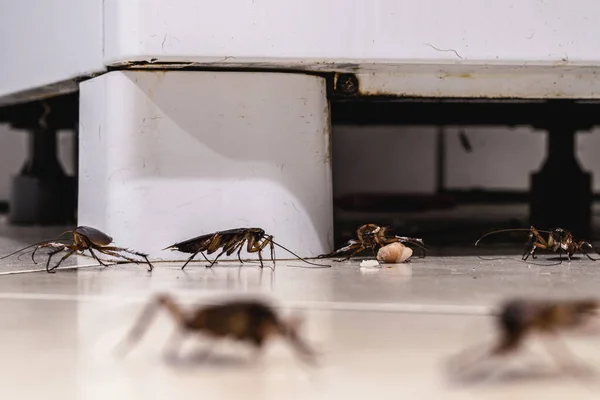
Because cockroaches are strictly nocturnal insects, their entire biology is geared toward hiding in dark, tight spaces during the daylight hours. If you turn on a kitchen light at 2:00 AM and spot a roach, you have a problem.
However, if you spot a live roach crawling around during the daytime, you have an emergency. Daytime activity almost always indicates that their primary harborages are completely maxed out and overcrowded. The dominant roaches have physically forced the weaker or younger nymphs out into the open to search for food.
2. Fecal Spotting and Droppings
Cockroach droppings are one of the earliest and most reliable indicators of an active infestation. The physical appearance of the waste depends entirely on the specific species invading your space:
- German Cockroaches: Their droppings resemble fine black pepper or coarse coffee grounds. You will typically find them aggregated in the upper corners of kitchen cabinets, along drawer tracks, and around microwave or refrigerator motor housings.
- Oriental and American Cockroaches: These larger species leave behind distinct, solid dark pellets with blunt ends and longitudinal ridges. Homeowners frequently mistake these for mouse droppings, but a trained eye knows that mouse droppings have pointed ends and lack ridges.
3. Egg Capsules (Oothecae)
Female cockroaches do not lay individual, loose eggs. Instead, they produce a hardened, protein-rich protective capsule called an ootheca.
A single German cockroach ootheca is a small, light-brown, purse-shaped capsule roughly 1/4-inch long that can hold up to 40 viable nymphs inside. Finding dropped or empty egg cases behind appliances, inside utility closets, or tucked along the hinges of kitchen cabinets is absolute proof that an active breeding cycle is occurring within the home.
4. The Aggregation Pheromone Odor
A heavy, established cockroach infestation carries a highly distinct, unmistakable scent profile. Many homeowners describe it as a musty, oily, sour, or intensely stale odor that lingers in the air even after cleaning.
This scent is caused by airborne aggregation pheromones produced in the roaches’ feces and scent glands, which they use to communicate and gather together. When walking into a heavily infested structure, a seasoned field technician can instantly diagnose the problem using their sense of smell alone.
5. Fecal Smear Marks
In high-humidity environments like bathrooms, under sinks, or behind washing machines, cockroach waste doesn’t always dry into neat pellets. Instead, as roaches travel along walls, baseboards, and structural junctions, they leave behind dark, irregular, horizontal smear marks. These dark stains are highly concentrated along the specific travel highways and cracks where they enter and exit wall voids.
👉👉 Can Cockroaches Smell Roach Gel Bait? Read THIS Article Now to Find Out
6. Cast Nymphal Skins (Shed Exoskeletons)
As a cockroach nymph matures from an egg to a fully reproductive adult, it must shed its rigid outer exoskeleton multiple times—a biological process known as molting.
German roaches molt six to seven times before reaching adulthood. These shed skins are thin, brittle, light-brown shells that perfectly preserve the shape of the growing insect. Finding piles of these hollow shells tucked deep inside cabinet corners or behind electronics means the colony population is actively growing and expanding.
7. Chewed Food Packaging
Cockroaches are opportunistic omnivores that possess powerful chewing mouthparts. They will easily chew through thin cardboard cereal boxes, paper flour bags, plastic bread bags, and open pet food bags. If you notice tiny, jagged chew holes or mysterious dark spotting around the edges of pantry items, wrap those goods in heavy, airtight plastic containers immediately to prevent widespread contamination.
8. Accumulations of Dead Roaches
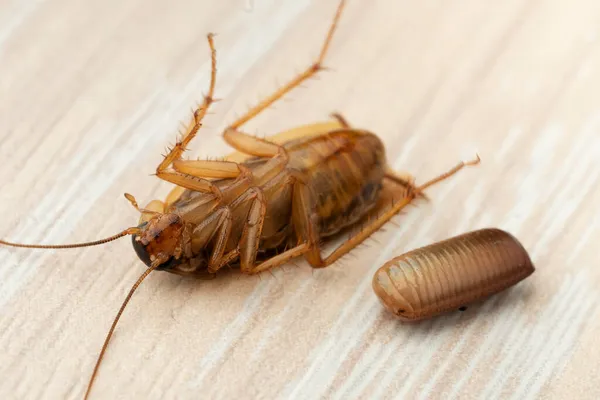
Finding a dead cockroach may initially feel like a victory, but it is actually a strong indicator of a significant local population. Cockroaches are cannibalistic; when food sources run tight, they will actively feed on their own dead. If you are consistently sweeping up dead roaches from your basement floor, utility room, or under the stove week after week, it means a large, active colony is nearby, naturally cycling through its lifespans.
9. Heavy Traffic Around Water Sources
Cockroaches can survive for weeks without a solid food source, but they will completely crash and die within a matter of days without direct access to moisture. This is why the first step of any professional inspection focuses heavily on water lines.
Look for active foraging lines around dishwasher kickplates, refrigerator water lines, condensation pan drip trays, bathroom sink traps, and water heater closets. A tiny pinhole plumbing leak inside a wall void can easily sustain a colony of thousands.
10. Escalating Sightings Over Time
The final, undeniable sign is a simple numbers game. Spotting one stray roach every six months might indicate an accidental hitchhiker that wandered in from a recent grocery delivery or cardboard shipping box.
However, transitioning from seeing one roach a month, to one a week, to multiple roaches every single night means the population has successfully established itself and is growing exponentially. Cockroaches reproduce too rapidly to take a “wait and see” approach.
🛒🥇 This is Our Field Tested Complete Roach Control Kit. Fast and Effective for complete Cockroach Control. 👇👇 Check Availability on DoMyOwn Now 👇👇 CA/NY Complient

The Master Cockroach Field Diagnostics Checklist
Use this systematic field audit checklist to inspect the primary harborages and isolate the exact scope of the problem.
Step 1: Kitchen Hotspot Audit
- Pull out the bottom storage drawer of the oven; check the floor and rear insulation lining for pepper-like droppings.
- Unplug the refrigerator and inspect the rear compressor motor shroud; the intense heat generated here is a premier German roach breeding ground.
- Empty the cabinet directly beneath the kitchen sink; check for water condensation along the hot water pipe lines and inspect the rear wall seam.
- Inspect the internal rubber door seals of the microwave and dishwasher for hidden harborages.
Step 2: Bathroom & Utility Inspection
- Examine the hollow void beneath the bathroom vanity cabinet baseboard plate using a strong flashlight.
- Check the drywall surrounding the toilet water supply line penetration; ensure it is completely sealed with caulk or escutcheon plates.
- Inspect the water heater pressure relief pipe and the surrounding floor area for moisture accumulation and smear marks.
- Audit stored cardboard boxes in utility rooms; shift all items to smooth plastic bins to eliminate a primary roach food and nesting source.
Step 3: Actionable First-Response Steps
- Thoroughly vacuum all visible droppings, shed skins, and egg cases using a HEPA-filter vacuum to immediately reduce allergen loads.
- Wipe down contaminated surfaces with an enzyme-based cleaner or warm soapy water to completely strip away the roach’s aggregation pheromone trails.
- Deploy professional-grade gel baits in tiny, matchhead-sized dots inside cracks and crevices where droppings were found.
- Add a high-quality Insect Growth Regulator (IGR) material to your treatment plan to safely halt the nymphs’ ability to molt into reproductive adults.
Disclaimer: While the pest control methods outlined in this handbook reflect decades of professional field experience and rigorous entomological review, always read, understand, and strictly follow the specific manufacturer labels on any pest control products applied to your property.