Last Updated on September 15, 2026 by Tim L. | Founder of Pest Control Playbook | Reviewed for Scientific Accuracy by our Co-Founder, an Associate Certified Entomologist (ACE)
Have you thoroughly scrubbed your kitchen, sealed every crumb in airtight containers, and yet still find cockroaches scuttling across your counters? You aren’t alone. Starving out a cockroach infestation is one of the biggest myths in home pest control.
To truly understand how to beat them, you have to look closely at their biological limits. This guide brings together our 40 years of combined hands-on pest control field experience and academic entomology expertise. We break down the exact timeline of cockroach survival, how it varies by species, and how you can weaponize this data to reclaim your home.
The Quick Answer: The Survival Timeline
If a cockroach is completely cut off from all resources, its survival baseline comes down to a strict biological rule:
- Without Food (But With Water): Up to 1 month (and sometimes longer depending on the species).
- Without Water (But With Food): Only 1 week.
For insects, dehydration is a far swifter killer than starvation. However, applying these timelines to a real-world home is where things get complicated.
💡 Professional Affiliate & Editorial Disclosure
Some links on this page are affiliate links, meaning a small commission may be earned on recommended professional-grade products (like pressurized backpack sprayers or commercial baits) at no extra cost to you.
Survival Limits by Species
Not all cockroaches are biologically identical. How long they can endure a resource drought depends entirely on the species invading your home:
| Cockroach Species | Survival Without Food (With Water) | Survival Without Water Only | Primary Home Target Areas |
|---|---|---|---|
| German Cockroach (Blattella germanica) | ~30 Days | ~7 Days | Kitchens, Bathrooms, Warm Appliances |
| American Cockroach (Periplaneta americana) | Up to 60+ Days | Up to 14 Days | Basements, Sewers, Crawl Spaces |
| Oriental Cockroach (Blatta orientalis) | ~30 Days | ~7 to 10 Days | Drains, Damp Sub-floors, Porches |
Why You Can’t “Starve Out” a Cockroach
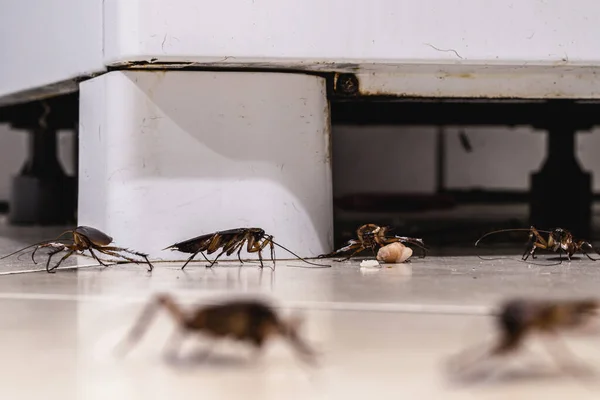
Many homeowners assume that an immaculate house will cause roaches to pack up and leave. From an entomological and field perspective, this strategy fails for two primary reasons:
1. Ectothermic Metabolism
Cockroaches are cold-blooded (ectothermic). They take on the ambient temperature of their environment rather than burning energy to regulate their own body heat. If food becomes scarce, they enter a state of metabolic depression to stretch their internal nutrient reserves for weeks.
2. They Eat Things You Don’t Consider “Food”
When crumbs and grease are eliminated, cockroaches shift to opportunistic scavenging. A “spotless” home still contains an abundant buffet of alternative organic material, including:
- Cellulose-based items like cardboard boxes and book bindings.
- Starch from wallpaper paste and envelope glue.
- Bathroom residue like bar soap, shampoo film, and toothpaste.
- Human detritus such as shed hair and dead skin flakes.
- Dead insects—including other deceased cockroaches.
👉👉 Using Roach Bait? Find Out How Long it Takes to Kill Roaches
🛒🥇 This is a great “total control kit”, and CA/NY compliant, to get rid of roaches fast! Check Prices and Availability 👇👇 on DoMyOwn Pest Control Now 👇👇

The True Enemy: Hidden Moisture Profile
Because water deprivation kills roaches rapidly, their entire daily behavior is driven by finding moisture. A roach does not need a puddle to stay alive; they possess a waxy exoskeleton designed to trap moisture and can survive off microscopic water sources:
- Condensation: High humidity on HVAC lines, refrigerator drip pans, or cold water pipes.
- Film & Sponges: A wet kitchen sponge or a damp dish towel leaves behind enough standing moisture to sustain dozens of roaches overnight.
- Hidden Traps: Sink P-traps and floor drains hold residual water constantly.
How to Weaponize This Data: A Professional Blueprint
Knowing that cockroaches are deeply dependent on water and highly resistant to starvation changes how you must attack them.
Step 1: Execute Total Moisture Exclusion
Do not just clean up crumbs; dry out your home.
- Fix every micro-leak under kitchen and bathroom vanities immediately.
- Dry your sinks with a microfiber cloth before going to bed.
- Bag wet kitchen sponges in ziplock containers overnight.
- Run a dehumidifier in damp basements or crawl spaces to drop the ambient humidity.
Step 2: Use Strategic Gel Baits
Because roaches can go a month without food, a simple spray will only scatter them. Instead, utilize their foraging habits against them with high-quality gel baits.
- Why it works: Gel baits are formulated with high moisture content. A water-seeking cockroach will actively prioritize the bait over alternative food sources.
- Placement: Place small, pea-sized dots near hidden moisture zones—behind toilets, under sinks, and near water lines.
Step 3: Implement IGRs (Insect Growth Regulators)
While adult roaches are tough, their young (nymphs) are highly vulnerable to resource dehydration. Adding an IGR breaks their life cycle by preventing nymphs from molting into breeding adults, completely halting population growth.