Last Updated on October 11, 2026 by Tim L. | Founder of Pest Control Playbook | Reviewed for Scientific Accuracy by our Co-Founder, an Associate Certified Entomologist (ACE)
If you are looking for an all-natural, 100% chemical-free way to eliminate crawling pests inside your home, you have likely run across Diatomaceous Earth (DE). It is widely celebrated in DIY communities as a miracle powder that kills bed bugs, ants, roaches, and fleas without introducing toxic synthetic chemicals around your family or pets.
However, the internet is filled with terrible advice on how to use it. Many homeowners pour heavy white lines of dust along their baseboards or dump piles of powder into their carpets. Not only does this ruin the effectiveness of the product, but it can also cause serious respiratory irritation for both you and your pets.
True organic diatomaceous earth eradication relies on precision placement and understanding insect biology. Backed by a combined 40+ years of professional pest management experience and certified entomology insights, this guide details the exact step-by-step DIY playbook to safely apply DE inside your home like a master technician.
💡 Professional Affiliate & Editorial Disclosure
Some links on this page are affiliate links, meaning a small commission may be earned on recommended professional-grade products (like pressurized backpack sprayers, professional roach baits, and organic insecticides) at no extra cost to you.
The Ultimate Clean Application Kit (Quick Answer)
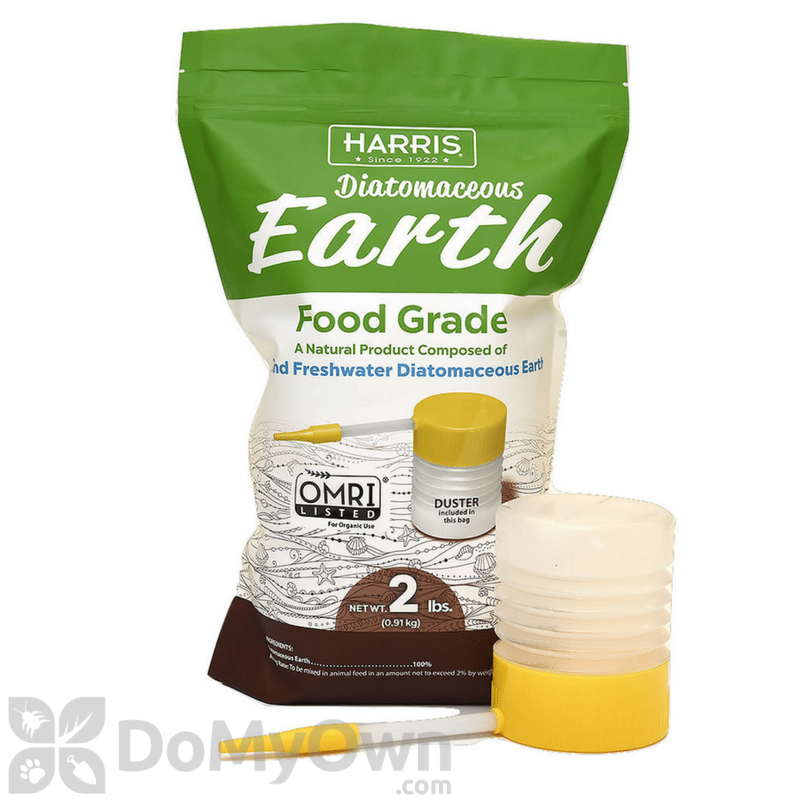
To bypass trial-and-error and apply diatomaceous earth safely without making a mess, our technicians recommend utilizing a food-grade formula combined with a mechanical delivery tool:
- The Complete All-In-One Solution: Harris Food Grade Diatomaceous Earth (4 lb Bag with Included Powder Duster) — This package features 100% ground freshwater diatomaceous earth with absolutely no chemical additives or synthetic fillers. It is OMRI listed for organic use, meaning it complies strictly with national organic standards.
- The Vital Precision Tool: The Included Harris Powder Duster — You should never sprinkle DE by hand out of the bag. This loadable bellows duster allows you to puff an invisible, micro-thin cloud of powder directly into hidden wall voids, cracks, and deep crevices where target insects actively crawl.
Shop Harris Diatomaceous Earth with Duster on DoMyOwn
👉 Looking for a Complete Organic Pest Control Starter Kit for Your Home? Read THIS Article Now
The Science: How Diatomaceous Earth Actually Kills Bugs
The first thing to understand is that diatomaceous earth is not a chemical poison. It is composed of the microscopic, fossilized remains of tiny aquatic organisms called diatoms. When ground down into a powder, it looks and feels like soft baking flour to human hands and animal paws.
However, under a microscope, these particles look like razor-sharp shards of glass. As an ant, roach, or bed bug walks through the powder, the microscopic edges slice through the protective, waxy outer layer of the insect’s exoskeleton. The powder then physically absorbs the natural moisture inside the insect, causing it to dehydrate and die within 24 to 48 hours of physical contact.
Because this is a completely physical killer, insects can never develop a biological immunity or behavioral resistance to it. More importantly, as long as the powder remains perfectly dry, it stays fully active and lethal indefinitely inside your structural walls.
Efficacy and Kill Timelines by Pest
- Ants: 24 to 48 hours
- Fleas & Beetles: 24 to 72 hours
- German Cockroaches: 48 to 72 hours (Laboratory 24-hour LC₅₀ is 4.238 g/m² for nymphs and 8.031 g/m² for adult males)
- Large Cockroaches & Silverfish: 48 to 96 hours
- Spiders: 2 to 5 days
- Bed Bugs: 7 to 17 days (or longer; field efficacy against heavy bed bug infestations is often considered limited by pest control authorities compared to heat or targeted chemical treatments)
The Master Rule: If You Can See It, It Is Too Thick
The single biggest mistake DIYers make is applying DE in thick, heavy piles. Cockroaches and ants are highly sensitive to changes in their pathways. If they come across a massive drift of white powder, they will simply recognize it as a physical barrier and walk right around it.
Your goal is to apply an invisible layer. You want the insects to walk blindly through the dust without realizing it is there, coating their legs and underbellies in the process. A micro-thin layer is highly effective, while a visible white line is completely wasted product.
👉👉 Having Ants in the Kitchen? Learn How to Get Rid of Them Naturally with Zero Pesticides
Step 1: Prep and Load Your Duster
Before you begin, make sure your targeted treatment surfaces are completely dry. Diatomaceous earth loses its physical cutting power the moment it absorbs moisture or liquid.
Take your Harris Powder Duster and fill it roughly half full with the food-grade DE powder. Drop a small coin or a metal nut inside the duster container before sealing it—this acts as an agitator to keep the fine powder from clumping together when you shake it. When you compress the duster, it should emit a faint, barely visible puff of white smoke rather than a heavy blast of dust.
👉 Want to know The Best Organic Pest Control Concentrates to Use in Your Home both Inside and Out? Read THIS Article Now
Step 2: Target Hidden Structural Wall Voids
Do not apply DE out in the open on kitchen counters, dining tables, or high-traffic floorboards. If it is kicked up by footsteps or ceiling fans, it can easily float into the air and cause eye or nasal irritation. Instead, you want to inject it directly inside the walls where the bugs live and travel.
Go around your home and remove the plastic faceplates from your electrical outlets and light switches. Insert the long nozzle of your Harris duster directly into the open gap around the electrical box and give the bellows one firm squeeze. This shoots a fine cloud of protective dust deep inside the hollow wall voids. This is the ultimate method for intercepting bed bugs and foraging ants as they travel along your home’s inner studs.
Step 3: Seal Kitchen Appliances and Plumbing Gaps
Kitchen pests like German cockroaches and sugar ants cluster heavily around warm appliance motors and moisture points.
Pull out your refrigerator and use your duster nozzle to apply a thin coating of DE across the floor footprint behind the appliance. Do the same under the kick-plate of your dishwasher and deep along the rear baseboard tracks inside your kitchen cabinets. Finally, puff a light layer into the hollow spaces around your under-sink plumbing penetrations where pipes pass into the drywall.

Step 4: Managing Baseboards and Doorways Safely
If you need to treat baseboards, do not pour lines along the floor. Instead, press the tip of your duster nozzle directly into the tiny expansion crack where the bottom of the wooden baseboard meets the subfloor or carpet. Puff the dust straight down into that narrow gap. This places the physical barrier exactly where insects squeeze into hiding places, completely protected from vacuum cleaners, pets, and children.
Frequently Asked Questions
Is food-grade diatomaceous earth safe around cats and dogs?
Yes, food-grade DE is completely non-toxic and is even OMRI listed as an organic feed supplement for livestock and household pets to prevent anti-caking. However, because it is an ultra-fine drying powder, breathing in a concentrated airborne cloud of it can dry out and irritate the lungs of both humans and animals. Always use a precision duster to keep the product confined inside hidden cracks and wall voids where it cannot be kicked up into the air.
Can I mix diatomaceous earth with water to apply it?
While you can technically mix DE with water to spray it as a wet slurry, it provides absolutely zero pest control benefits while it is wet. Diatomaceous earth only kills crawling insects via physical dehydration when it is completely dry. If you apply it wet, it will not begin working until the water evaporates completely, leaving a dry crust behind. For indoor applications, sticking to a dry powder duster is highly recommended.
How long does it take for diatomaceous earth to work?
DE is not an instant contact-killer. Once an insect walks through a micro-thin layer of the powder, it typically takes anywhere from 24 to 48 hours for their exoskeleton to dry out enough to cause total mortality. If you have a massive, fast-breeding infestation like German cockroaches or bed bugs, DE should be paired alongside professional non-repellent residuals and insect growth regulators (IGRs) for total colony collapse.
Do I need to vacuum up diatomaceous earth after applying it?
If you apply it correctly inside hidden wall voids, cabinet frames, and appliance recesses, you can leave it undisturbed for years to act as a permanent physical insect barrier. However, if you mistakenly applied a thick layer across an open floorboard or carpet area, you should vacuum it up immediately. Be warned: standard household vacuums can easily burn out their motors filtering fine silica dust, so using a shop-vac with a high-efficiency drywall filter bag is best.