
Last Updated on September 22, 2026 by Tim L. | Founder of Pest Control Playbook | Reviewed for Scientific Accuracy by our Co-Founder, an Associate Certified Entomologist (ACE)
Finding fresh wood shavings at the base of a threshold or discovering jagged holes along a garage entrance brings up a frustrating question: Can mice actually chew completely through a solid wood door?
To a property manager or homeowner, wood feels like a durable structural boundary. To a rodent, it is simply a temporary obstacle.
When a mouse infestation targets an exterior or interior door, it is not a random act of destruction. It is a calculated attempt to exploit an environmental weakness. If your structural pest program only relies on temporary fixes like standard weather stripping or basic expanding foam, you are inviting immediate failure.
To help you protect your building envelope, we are breaking down the exact mechanics behind how rodents destroy wood doors, how to stop them using professional-grade hardware, and what to look for when securing your perimeter.
Meets the Experts: Field-Tested Authority
This playbook is written by the founding team at the Pest Control Playbook. Backed by an Associate Certified Entomologist (ACE) credential and over 40 years of combined hands-on field and management experience, we have audited, diagnosed, and permanently resolved thousands of complex structural rodent infestations. We don’t guess—we apply strict entomological science and rigid physical engineering to protect structures.
💡 Professional Affiliate & Editorial Disclosure
Some links on this page are affiliate links, meaning a small commission may be earned on recommended professional-grade products (like pressurized backpack sprayers, mouse traps, or exclusion materials) at no extra cost to you.
1. The Biological Fuel: Why Mice Gnaw on Solid Wood
To understand why a mouse attacks a wood door, you have to look at their anatomy. Rodents possess a pair of continuously growing, rootless incisors in both their upper and lower jaws. These teeth grow at an astonishing rate of up to 4 to 5 inches per year.
To prevent these incisors from growing into their own skulls, mice must constantly wear them down through a process called mechanical gnawing.
A mouse’s teeth are covered in an ultra-hard outer enamel layer that ranks roughly a 5.5 on the Mohs hardness scale. This makes their teeth harder than iron, copper, aluminum, and most common varieties of wood, including solid oak, pine, and engineered composites. If a mouse detects a tiny sliver of air current, an existing crack, or a soft edge on a wooden threshold, they can chew completely through a standard residential exterior wood door in less than 24 hours.

2. Prime Target Zones on Wood Doors
Mice rarely attempt to chew through the dead-center flat face of a heavy wood door. Instead, they strategically target architectural gaps where they can gain leverage with their teeth:
- The Bottom Corners: This is the number one failure point. Standard rubber or vinyl door sweeps degrade over time. Once the weather stripping cracks, mice detect the warm air escaping from the interior, stick their teeth into the exposed bottom corner of the wood frame, and enlarge the gap.
- The Door Frame and Jamb Junction: If a door frame warps due to shifting foundations or seasonal moisture, it creates a pinch point. Mice will wedge themselves into the frame gap, chewing away at the soft wood stop until they can slide their compressed skeletons inside.
- The Threshold Interface: Wooden thresholds wear down from foot traffic. A worn threshold creates an enlarged gap between the bottom of the door and the floor, giving rodents an open invitation to begin gnawing.
👉👉 Mice have chewed through your door but you can’t trap them? Read THIS article now on How to Trap a Smart Mouse
3. Structural Re-Enforcement: The Professional Exclusion Playbook
Fixing a gnawed wood door requires shifting away from consumer-grade materials. Replacing a chewed door sweep with another basic vinyl sweep ensures you will be dealing with the exact same damage next week. You must install a mechanical, bite-proof barrier.
Upgrade to Heavy-Duty Kick Plates
If rodents are targeting the lower face of a wood door, you should reinforce the entire bottom section with a commercial-grade stainless steel or anodized aluminum kick plate. This completely blocks access to the wood fibers underneath, leaving the mice with a surface they cannot bite into.
- Professional Recommendation: Look for a heavy-gauge steel kick plate that covers at least the bottom 6 to 10 inches of the exterior face.
Install Rodent-Proof Door Sweeps
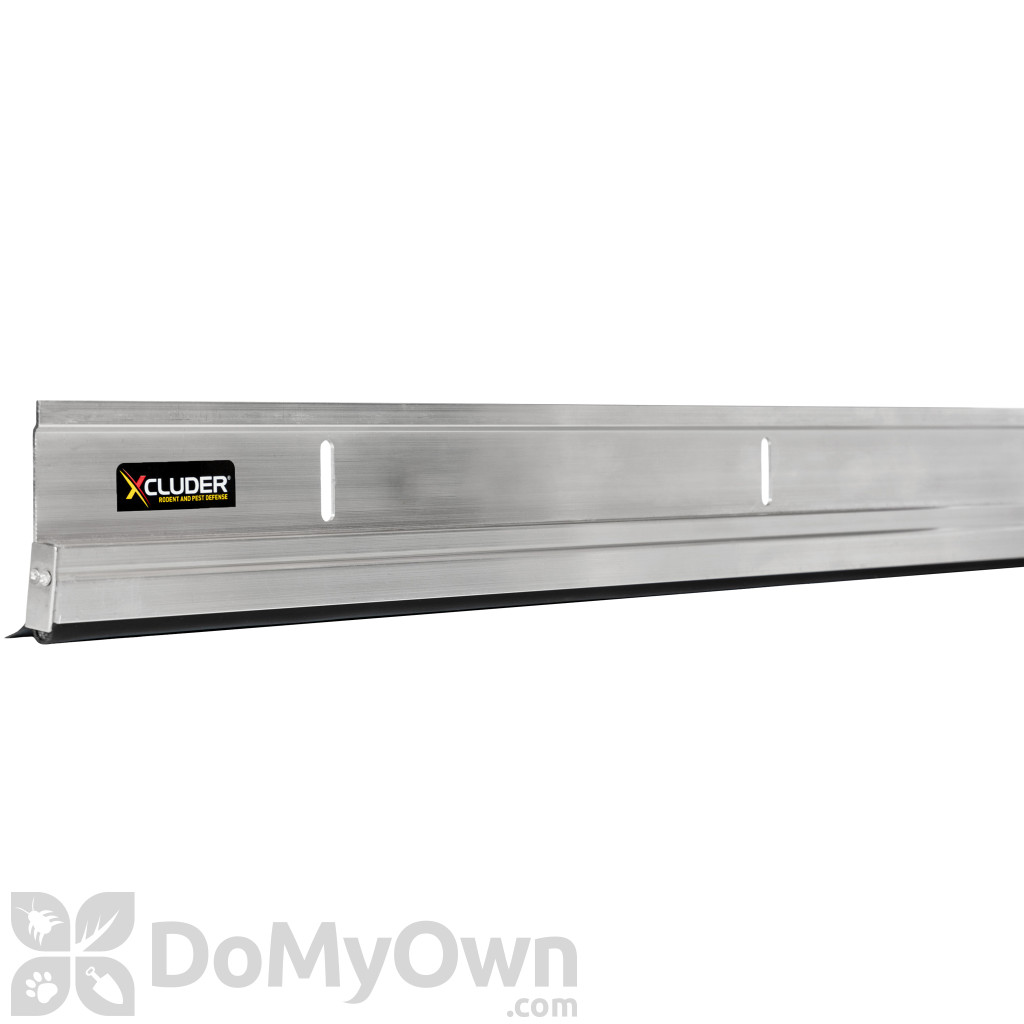
Standard sweeps use basic vinyl or rubber flaps that rodents can destroy in minutes. True mechanical exclusion requires heavy-duty sweeps that feature an integrated metal matrix.
- Professional Recommendation: We highly recommend utilizing Xcluder Rodent Proof Door Sweeps. These heavy-duty sweeps are constructed from durable aluminum housings filled with a proprietary blend of coarse stainless steel wool and poly fibers. When a mouse tries to chew through the lower flap, the steel wool fibers pierce their mouth tissue, causing immediate behavioral aversion without the use of chemical toxins.
Reinforce the Jambs with Steel Mesh
If a hole has already been chewed into the wood casing or jamb, you must pack the void tightly before completing cosmetic repairs.
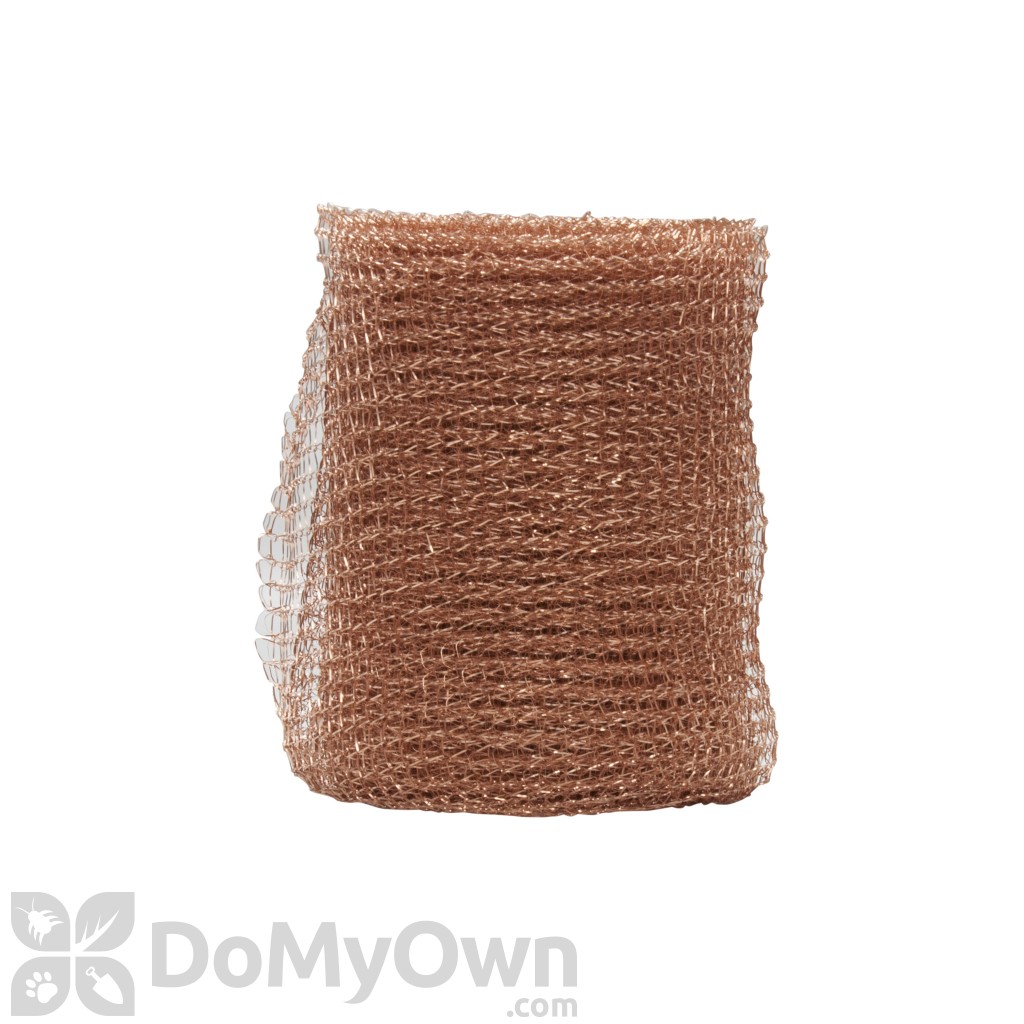
- Professional Recommendation: Clean out the loose wood fragments. Pack the cavity tightly with pure copper mesh or heavy coarse stainless steel wool. Once the mechanical barrier is wedged firmly into the void, backfill it with a high-strength exterior wood epoxy or a specialized rodent-rejection sealant compound. Once cured, you can sand and paint the repair to match the structure.
📋 The No-Nonsense Rodent Exclusion Q&A
Q: Can mice chew through solid core wood doors as easily as hollow core doors?
A: No, but they can still breach both. Hollow core doors are constructed with thin wood veneer skins over a cardboard honeycomb interior, making them incredibly easy for a mouse to chew through once they find an edge. Solid core doors offer significantly more structural resistance and take much longer to breach, but if there is an active air leak at the bottom corner, a persistent rodent will eventually gnaw their way through solid wood.
Q: Will painting or staining the wood stop mice from chewing it?
A: Absolutely not. Paint, varnish, and wood stains provide purely cosmetic protection against weathering and moisture. They offer zero chemical or structural deterrent to a foraging rodent driven by the biological necessity to wear down its teeth.
Q: Can I use standard expanding polyurethane foam to patch a hole in a wood door frame?
A: Never use standard canned expanding foam for rodent exclusion. Standard foam cures into a soft, airy texture that offers zero mechanical resistance. A mouse can chew through cured expanding foam in less than 60 seconds. Always use steel mesh or specialized rodent-resistant compounds that contain embedded stainless steel or glass particles.
Q: How small of a gap do I need to look for along the bottom of the door?
A: A mature field mouse only requires a gap measuring 1/4 of an inch (roughly the width of a standard ink pen) to compress its skeletal structure and slide underneath a door. If you can slide a common pencil under your door sweep, a mouse can enter without doing any chewing at all.
Summary Focus
Permanent structural containment means turning your building envelope into an unbreachable perimeter. If you are dealing with aggressive rodent pressure targeting your wooden access doors, stop relying on consumer-grade caulk and vinyl sweeps. Step up to commercial aluminum plates, stainless-steel-filled sweeps, and heavy metal mesh inserts to protect your property investment for the long haul.