
Last Updated on June 24, 2026 by Tim L. | Founder of Pest Control Playbook
Roaches in the Daytime? Here’s What It Really Means
Most people expect to see roaches at night.
So when one crawls across your floor in the middle of the day, it feels… wrong.
It is.
Seeing roaches during the day is usually a sign of a serious infestation.
Here’s why—and what you should do about it NOW! This is what I have learned throughout my 30 Years in the Pest Control Industry. When I walk into a house for an inspection for roaches, and they come out to say hello, that is the sign of a major infestation.
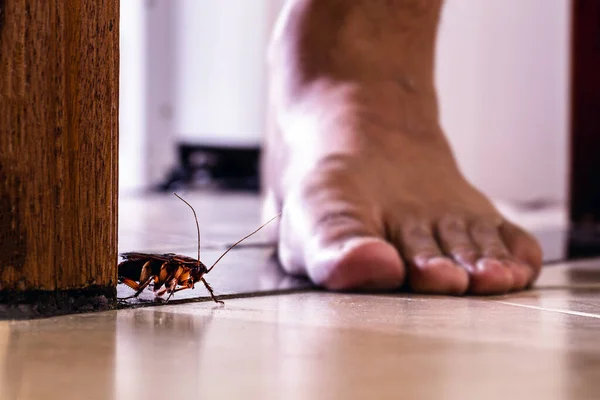
Roaches Are Nocturnal for a Reason
Roaches are built to avoid danger.
They prefer:
- Darkness
- Quiet
- Hidden movement
That’s why they typically come out at night when everything is still.
So if they’re active during the day, something has changed.
💡💡 Read our Step by Step Guide How to Get Rid of Roaches Fast here
The Real Reason You’re Seeing Them
1. Overcrowding Is Forcing Them Out
This is the #1 cause.
When a roach population gets too large:
- Hiding spaces fill up
- Food becomes competitive
- Lower-ranking roaches get pushed out
So they’re forced to search during the day.
Translation: there are a LOT more roaches than you’re seeing.
2. They’re Running Out of Food or Water
If resources are limited, roaches become more aggressive in their search.
That means:
- Daytime movement
- Expanding into new areas
- Increased visibility
They’re not getting bold—they’re getting desperate.
Dealing with roaches right now?
I’m putting together a no-BS email series based on real pest control work (what actually works and what doesn’t).
👉 Get early access:
3. You Disturbed Their Hiding Spots
If you recently:
- Cleaned heavily
- Moved appliances
- Sprayed insecticide
You may have disrupted their nesting areas.
This causes:
- Roaches to scatter
- Increased daytime sightings
- Movement into new hiding spots
4. Light Isn’t Scaring Them Anymore
In a heavy infestation, roaches become less sensitive to light and you may start seeing more roaches during the day.
They stop waiting for “safe” conditions and start moving whenever they need to survive.
That’s when you start seeing them out in the open—even during the day.
Where Daytime Roaches Usually Show Up
If you’re seeing them during the day, check these areas first:
- Kitchen counters
- Around sinks
- Near trash cans
- Inside cabinets
- Bathroom floors
These are high-resource zones where infestations tend to center.

What This Means for Your Infestation
Let’s be clear:
Daytime sightings usually mean the problem is already advanced.
It often indicates:
- A large, established colony
- Multiple hiding areas
- Active reproduction
This isn’t an early warning sign—it’s a late one.
What You Should Do Immediately
If you’re seeing roaches during the day, don’t rely on quick fixes.
You need to take action that targets the entire population.
1. Don’t Rely on Spray Alone
This is hugely important. You need to attack the roach infestation from all angles.
Sprays will:
- Kill visible roaches
- Do nothing to the hidden majority
Use them only for quick knockdown—not your main solution.
2. Start Using Gel Bait
This is critical.
Place bait in:
- Cracks and crevices
- Behind appliances
- Under sinks
- Cabinet corners
This is what reaches the colony.
3. Add an IGR
An Insect Growth Regulator:
- Stops reproduction
- Prevents population rebound
Without this, the problem can cycle back.
4. Eliminate Water Sources
Before bed:
- Dry sinks
- Fix leaks
- Remove standing water
This forces roaches to move—and into your bait.
5. Focus on Hidden Areas
Don’t just treat what you see.
Target:
- Behind the fridge and stove
- Under cabinets
- Wall gaps and entry points
That’s where the real problem is.
👉 PRO TIP! Want to know where Roaches Hide during the day? Read THIS article
What to Expect After Treatment
Once you start doing this correctly:
- First 24–48 hours: You may see even more activity (normal)
- Next few days: Dead roaches appear
- Week 1: Noticeable reduction
- Week 2+: Population collapse

The Bottom Line
Seeing roaches during the day isn’t random.
It means:
- The population is large
- Resources are under pressure
- The infestation is established
The sooner you switch from reacting to treating the source, the faster you get control.
Simple Takeaway
If you see a roach during the day:
Don’t ignore it. Don’t just spray it.
Assume there are many more hiding—and act accordingly.
Because in most cases…
The one you see is just the tip of the problem.