
Last Updated on September 8, 2026 by Tim L. | Founder of Pest Control Playbook | Reviewed for Scientific Accuracy by our Co-Founder, an Associate Certified Entomologist (ACE)
Finding a single cockroach scurrying across your property is an instant trigger for anxiety. Whether it happens on a residential kitchen counter at midnight or across a commercial food preparation line during service hours, the same alarming question always surfaces: “If I just saw one, how many hundreds are hiding behind the walls?”
The short answer is: It depends entirely on the species, the time of day, and the layout of the property.
Over our 42 combined years of hands-on field experience—which includes the advanced technical guidance of an Associate Certified Entomologist—we have diagnosed thousands of cockroach issues. We have inspected properties where a single stray bug was truly just a lone traveler. Conversely, we have walked into environments where a client reported seeing “just one little roach,” only to pull back a refrigerator or commercial prep table and reveal a massive, reproducing colony.
Ignoring that lone roach is one of the costliest mistakes a property owner can make. This guide breaks down the precise field metrics we use to determine if a single sighting is an isolated incident or the first warning sign of a full-blown infestation.
The Species Blueprint: What Did You Actually Find?
To evaluate your level of risk, you must accurately identify the cockroach species. Different roaches exhibit completely distinct biological behaviors, reproduction velocities, and habitat preferences.
German Cockroaches: High Threat Level
German cockroaches are the absolute worst-case scenario for indoor environments. They are small, light brown, and distinguished by two dark parallel stripes running down their protonum (the shield behind the head).
These pests are built exclusively for indoor survival and reproduce at an exponential rate. A single breeding female can carry an egg capsule (ootheca) containing up to 40 nymphs. If you spot even one German cockroach in a kitchen, bathroom, or employee breakroom, you should immediately assume there is an active, breeding population hidden nearby. They do not travel long distances outdoors; if one is inside, the nest is inside.
American & Oriental Cockroaches: Moderate Threat Level
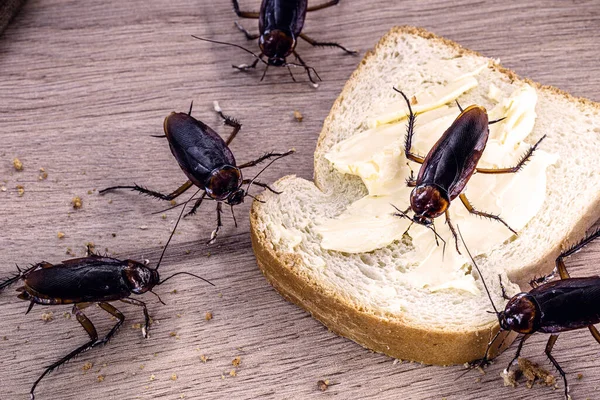
American cockroaches are large, reddish-brown pests that can grow over two inches long. Oriental cockroaches are darker, greasy-black, and thrive in cool, high-moisture zones like crawlspaces and floor drains.
Both species primarily live outdoors in mulch beds, sewer lines, and storm drains. They typically enter structures by accident, seeking water during a drought or fleeing saturated ground after a heavy rainstorm. Finding a single American or Oriental roach frequently points to a structural gap or a plumbing seal failure rather than an entrenched indoor breeding cycle. However, if left unchecked in damp basements or commercial warehouse spaces, they can establish permanent colonies.
Direct Comparison: Isolated Incident vs. Active Infestation
| Sighting Vector | Isolated Incident Profile | Active Infestation Signals |
|---|---|---|
| Species Identified | American, Oriental, or Wood Roach | German Cockroach (Any age/size) |
| Time of Sighting | Dead of night, immediately following heavy rainfall | Broad daylight or within minutes of turning off lights |
| Pest Life Stage | Single, fully mature adult insect | Tiny, wingless nymphs (indicates local breeding) |
| Physical Evidence | Clean surfaces; no debris or markings nearby | Fecal spotting (looks like black pepper), shed skins, or egg casings |
| Environmental Context | Found near an open garage door or exterior entry | Found inside deep cabinet hinges, motor housings, or utility lines |
👉👉 Read Our Complete Guide to Roach Elimination HERE
Signs That “Just One Roach” Means a Massive Nest
If you have spotted a lone cockroach, you must immediately audit the surrounding environment for these secondary indicators of a hidden colony:
- Fecal Spotting: Cockroaches leave behind small, dark droppings that resemble coffee grounds or black pepper. Look for these deposits along cabinet corners, door frames, wall junctions, and behind appliances.
- Discarded Egg Cases: Cockroach egg capsules are small, purse-shaped structures. Finding intact or empty casings confirms that structural breeding is actively occurring on the premises.
- Daytime Activity: Cockroaches are strictly nocturnal. If you observe a roach traveling openly during daylight hours, it usually means the hidden harborages are completely overcrowded, forcing weaker roaches out into the open to search for food.
- A Distinct Pheromone Odor: Severe infestations produce an unmistakable oily, musty smell. This pheromone trail is used by the colony to communicate, and if human noses can detect it, the population density is already dangerously high.
The Professional Verdict: Protocol for a Single Sighting
When dealing with cockroaches, proactive defense is always less expensive than reactive eradication. If you spot a roach, do not rely on over-the-counter aerosol sprays. These retail sprays are highly repellent; they will kill the single bug you see but will cause the hidden colony to scatter deeper into wall voids and adjacent rooms, compounding the issue.

The professional protocol requires clean sanitation, removing competing food sources, and deploying sticky monitors behind appliances to trap foraging insects overnight. If those monitors capture multiple life stages—especially small nymphs—it is time to deploy professional-grade gel baits and growth regulators.